China — and above all the Guangzhou/Guangdong cluster — is the largest OEM/ODM cosmetics manufacturing base in the world, with deep contract-manufacturing capacity across skincare, colour cosmetics, hair and personal care. Cosmetics made and sold in China are governed by the National Medical Products Administration (NMPA) under the Cosmetic Supervision and Administration Regulation (CSAR), in force since 2021, which separates “special” cosmetics (such as sunscreen, whitening and hair dye) that require NMPA registration from “ordinary” cosmetics that require notification. For brands manufacturing in China purely for export, the destination market’s rules usually apply instead — which is why so many Guangzhou factories publish EU CPNP and US FDA documentation alongside GMPC and ISO 22716 credentials. If you are weighing China against other Asian sourcing hubs, it is worth comparing it with South Korea and Taiwan.
This guide profiles 8 OEM/ODM and private-label cosmetic manufacturers in China — what each specialises in, where it is based, and a direct link to its official website. Every homepage shown below was screenshotted live in July 2026, and because overseas sourcing carries real due-diligence risk, we recommend reading our guide on how to vet an overseas cosmetics manufacturer before you request quotes.
Key takeaways
- China’s Guangzhou/Guangdong cluster offers the widest range of formats, formula libraries and price points of any cosmetics manufacturing base — from single-format specialists to full-service, one-stop factories.
- All eight manufacturers here run English-language, export-oriented operations and publish GMPC and/or ISO 22716 references; Ausmetics (founded 1998) and Guangdong Bawei (2006) are the longest-established on the list.
- For colour cosmetics that need EU or US paperwork, Cindi’s CPNP / REACH / FDA stack stands out; for ingredient-led skincare, Bawei’s patent and R&D story is the most developed.
- Indie brands needing small first runs will find Metro Private Label’s stated 500-piece minimum the most accessible; volume brands should shortlist the larger 15,000–80,000 m² generalists.
- Every product sold domestically must comply with the NMPA’s CSAR framework — always confirm who is responsible for registration or notification with a factory before you sign.
How we chose this list
This is an editorial shortlist, not a paid ranking — oemhallmark does not sell placement. We started from cosmetics manufacturers that (a) are physically based in mainland China, (b) publicly offer OEM/ODM or private-label contract manufacturing, (c) operate an English-language corporate website that resolves and renders cleanly, and (d) display recognised manufacturing credentials (GMPC and/or ISO 22716) on that site. We reviewed each official website in July 2026, captured a live screenshot of every homepage shown below, and verified that each company link resolves. The numbered order reflects our read of establishment, transparency and breadth of verifiable information — it is not a measured score. Certifications, factory sizes and capacity figures are as published by each company and should be treated as company-stated unless you have independently verified them.
The list at a glance
| Manufacturer | Best for | Main strength | Keep in mind |
|---|---|---|---|
| Ausmetics | Wide multi-category range from one supplier | Established 1998; multiple production bases | Generalist rather than single-format specialist |
| Cindi | Colour cosmetics with EU/US documentation | Broad compliance stack (CPNP, REACH, FDA, Halal) | Makeup-led, less skincare focus |
| Guangdong Bawei | Ingredient-forward, R&D-driven skincare | 60+ patents; deep active-ingredient library | ODM/OBM model, not pure private-label filler |
| Guangzhou Qiaomei | Multi-format personal care at volume | 25+ years; large automated-line count | Confirm which categories are made in-house |
| Guangzhou Cosmetics Factory | One-stop skincare, makeup, hair & fragrance | Very broad catalogue; 15,000 m² site | Check MOQ/lead time per category |
| Qianlan | Straightforward skincare/haircare private label | Full-range one-stop service | Less independently verifiable scale detail |
| Guangzhou Kangwei | Personal care plus home-fragrance products | 100,000-class GMPC cleanroom; unusual category mix | Smaller profile than volume factories |
| Metro Private Label | Low-MOQ skincare for indie brands | Accessible ~500-piece minimums | Published scale smaller than volume houses |
1. Ausmetics
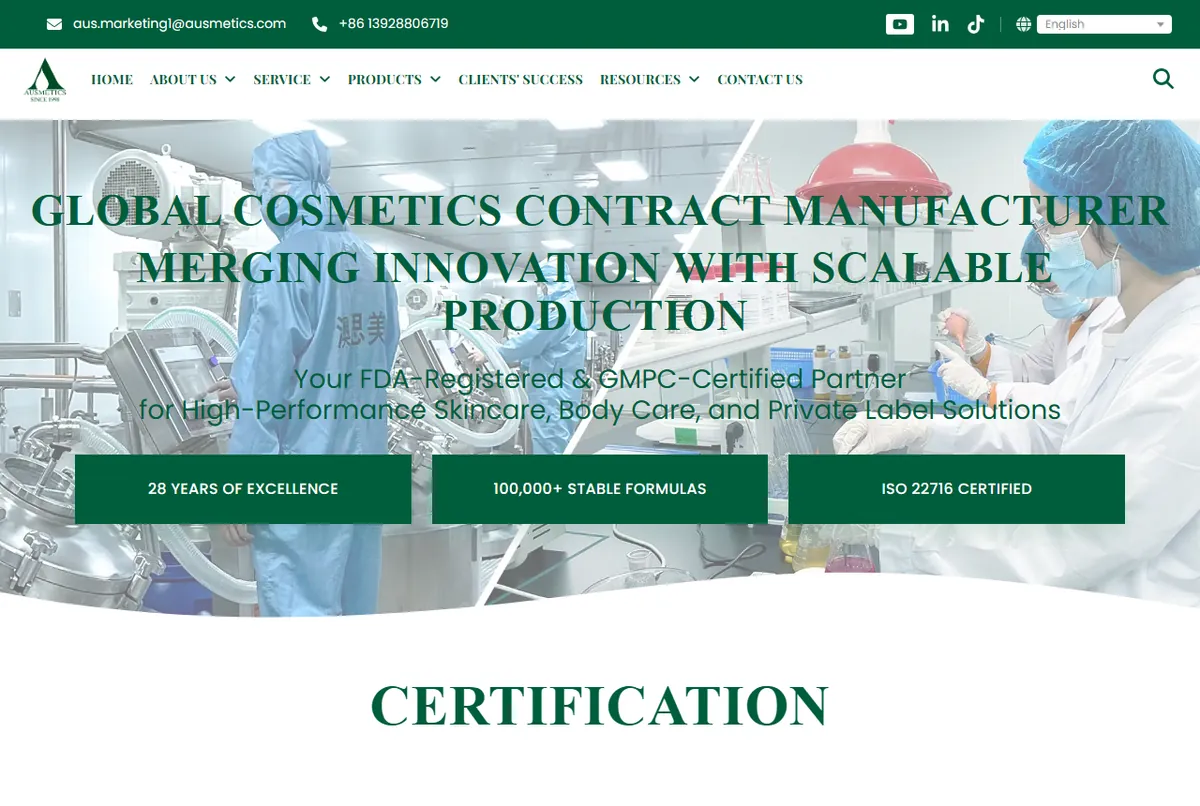
HQ: Guangzhou, China · Type: OEM/ODM contract manufacturer · Best known for: Broad personal-care range across multiple production bases
Founded in 1998, Ausmetics (Ausmetics Daily Chemicals (Guangzhou) Co., Ltd.) is one of the more established contract manufacturers in the Guangdong cluster, running separate production bases for skin care, mom & baby and household products. Its site emphasises ISO 22716 and GMPC processes, an in-house R&D and analytical lab, and a formula library the company puts at 3,000-plus. It is a sensible shortlist candidate for brands that want a wide category range — face, body, sun, tanning, baby — from a single English-speaking supplier, with the trade-off that its generalist breadth makes it less of a single-format specialist.
2. Cindi Cosmetics
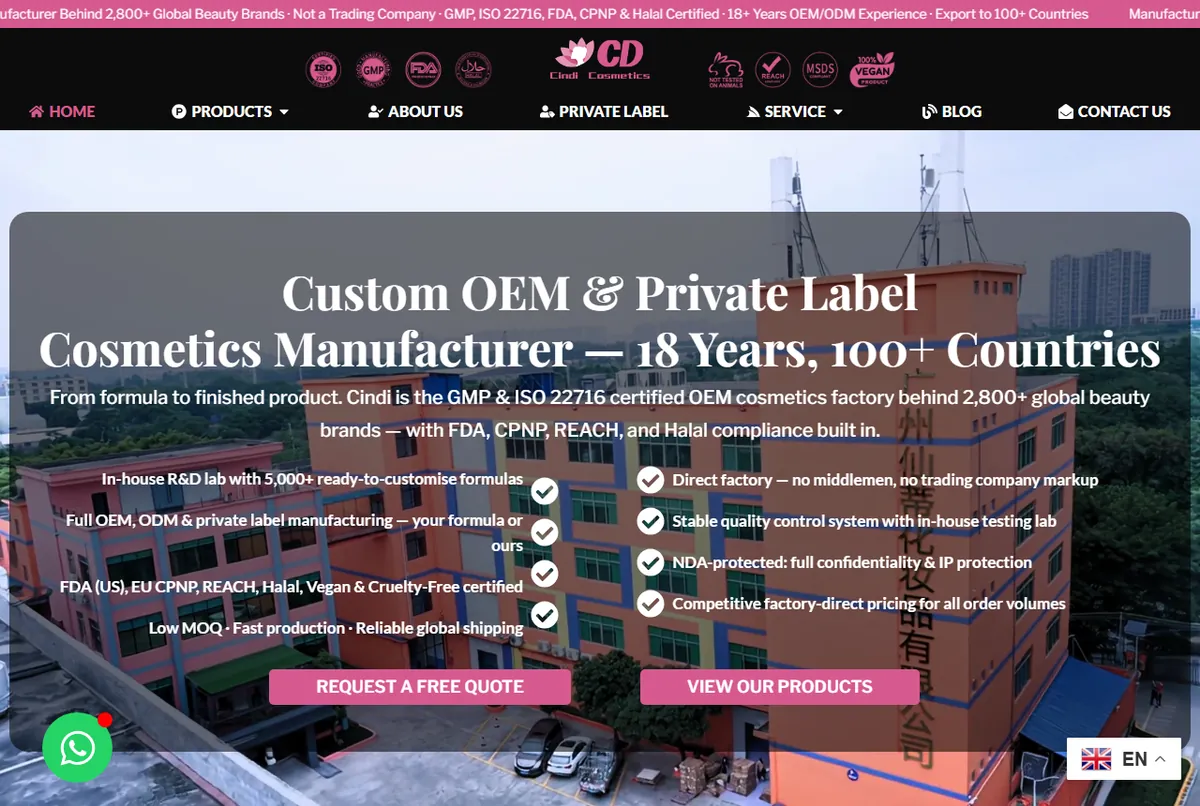
HQ: Baiyun, Guangzhou · Type: OEM/ODM & private-label makeup manufacturer · Best known for: Colour cosmetics (face, lip and eye)
Cindi (Guangzhou Cindi Cosmetics Co., Ltd.) positions itself as a colour-cosmetics specialist with an unusually complete compliance stack for a mid-sized Guangzhou factory — it lists GMP, ISO 22716, US FDA registration, EU CPNP, REACH, Halal and vegan/cruelty-free credentials. The company states an in-house library of 5,000-plus formulas and direct-factory pricing, stressing that it is “not a trading company.” Brands building a makeup line that needs EU or US market documentation will find its paperwork orientation useful; skincare-led brands may prefer a dedicated skincare house.
3. Guangdong Bawei Biotechnology
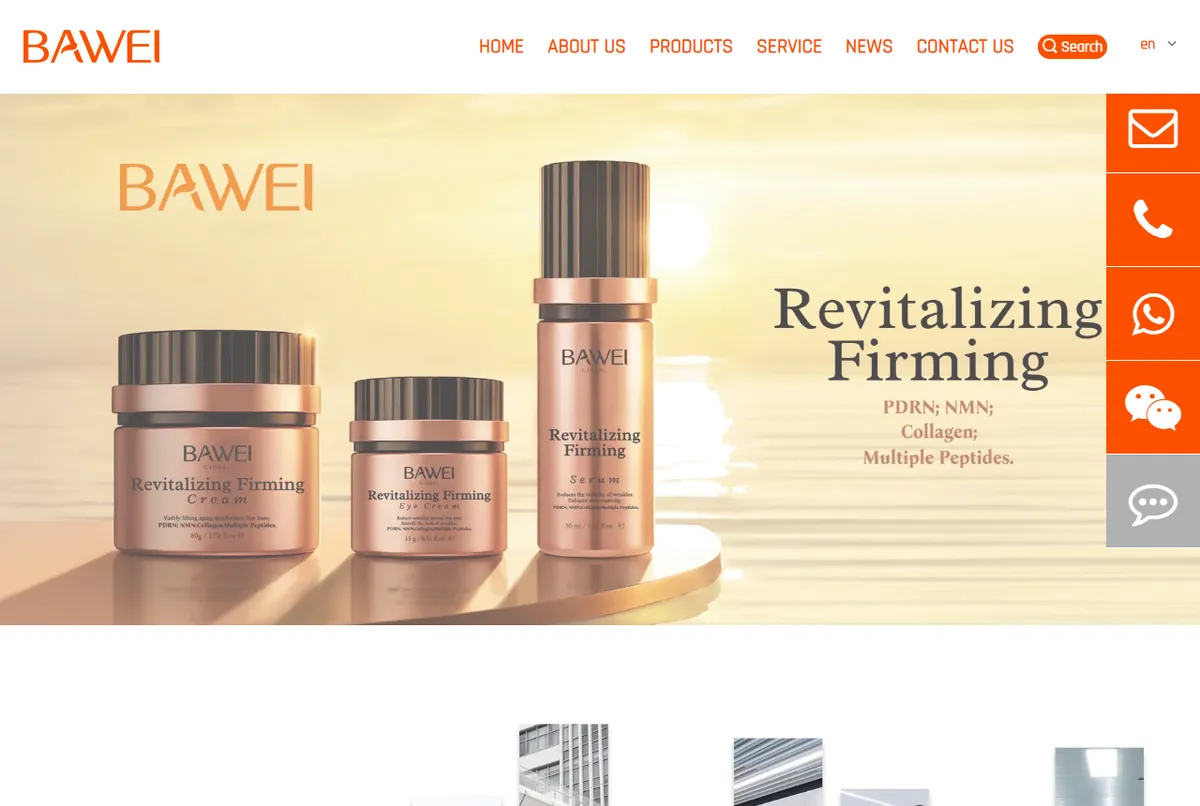
HQ: Guangzhou, China · Type: ODM/OBM skincare & personal-care manufacturer · Best known for: R&D-driven skincare (peptides, collagen, actives)
Established in 2006, Bawei leans on an R&D story: it cites 60-plus invention patents, a 6,000-formula library and raw-material relationships with suppliers such as Merck, BASF and Symrise. Its certification list — ISO 9001, ISO 22716, GMPC, ISO 14001, FDA and CNAS — is broad, and it markets active-led ranges built around ingredients like PDRN, NMN, collagen and peptides. It suits brands that want ingredient-forward formulation from an ODM/OBM partner rather than a pure private-label filler.
Visit Guangdong Bawei Biotechnology →
4. Guangzhou Qiaomei (QM Cosmetic Factory)
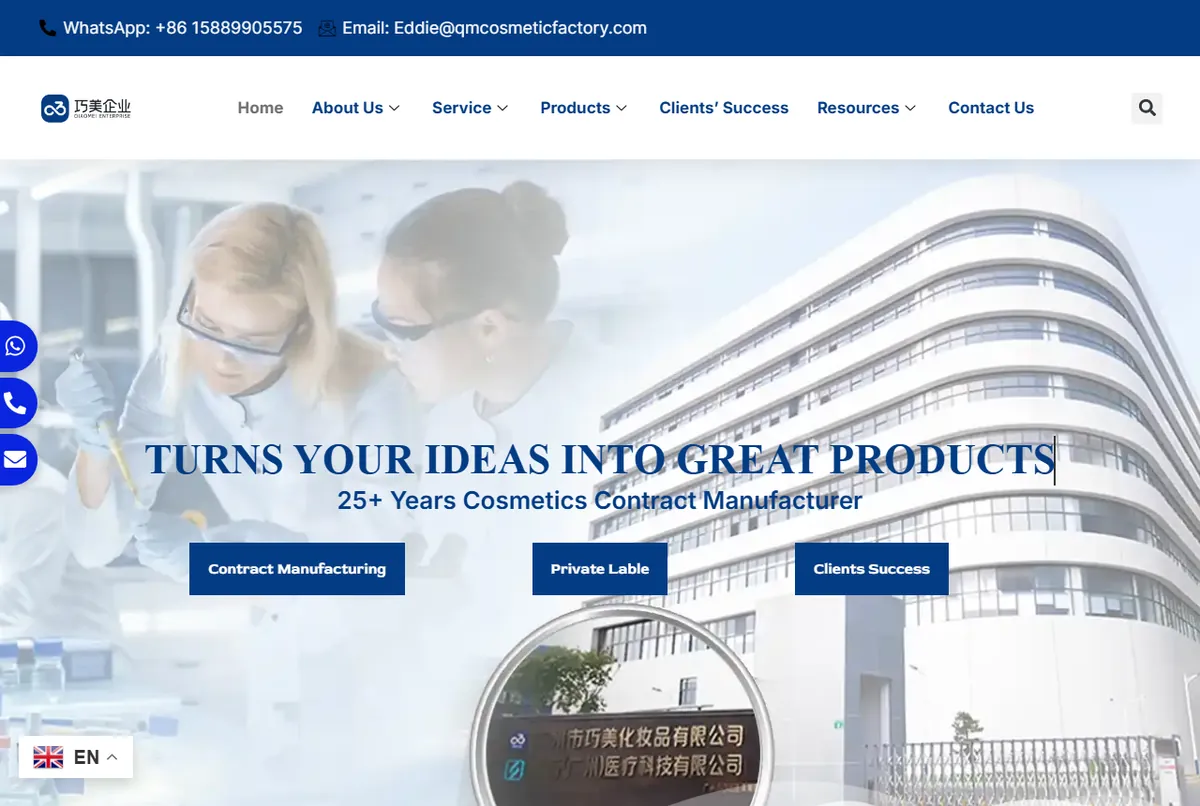
HQ: Guangzhou, China · Type: OEM/ODM contract manufacturer · Best known for: Multi-category personal care at scale
Trading as QM Cosmetic Factory, Guangzhou Qiaomei markets more than two decades of contract-manufacturing experience across hair, face, body, sun and mom & baby lines, and publishes ISO 22716, GMPC, FDA, Sedex and Halal credentials alongside a sizeable automated-line count. Its breadth makes it a candidate for brands wanting several product formats from one factory. As with most large generalists, buyers should confirm which specific categories are produced in-house versus outsourced before committing.
Visit Guangzhou Qiaomei (QM Cosmetic Factory) →
5. Guangzhou Cosmetics Factory
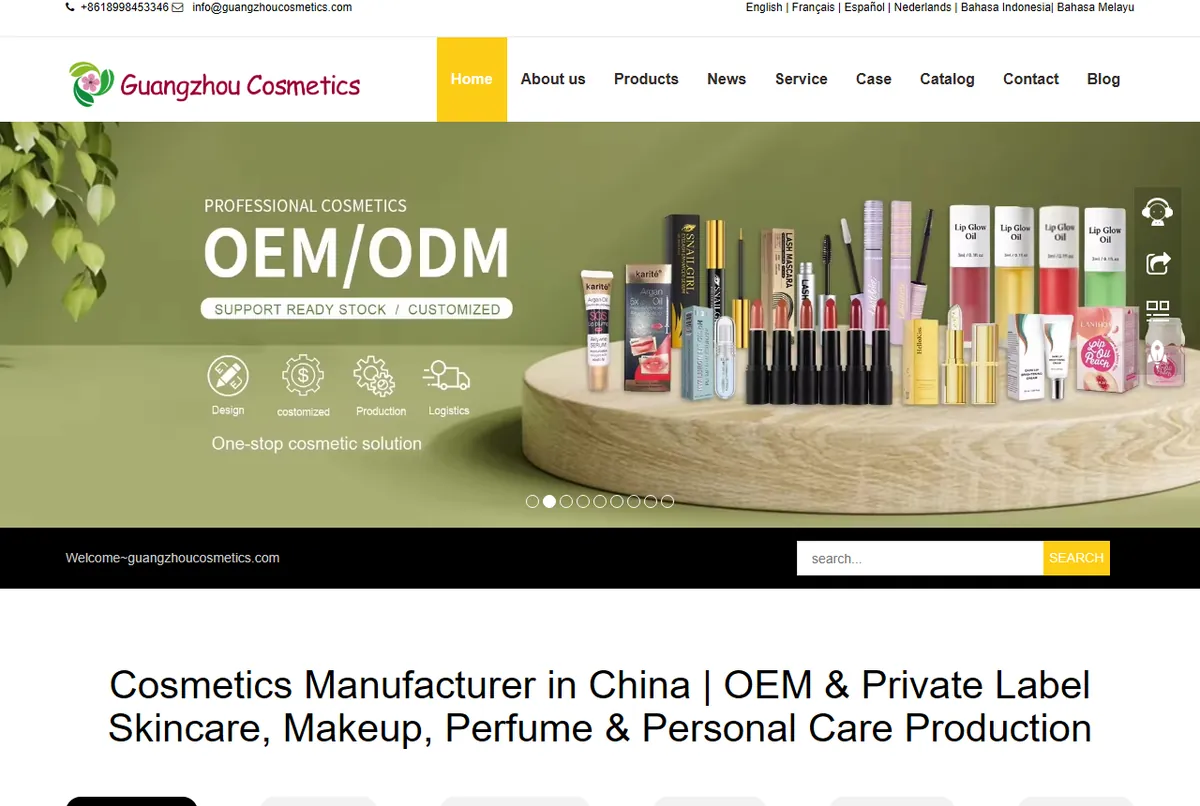
HQ: Baiyun, Guangzhou · Type: OEM/ODM/OBM full-service manufacturer · Best known for: One-stop skincare, makeup, hair and fragrance
This full-service Baiyun manufacturer covers an especially wide catalogue — skincare, colour cosmetics, hair, body, personal care and fragrance — and publishes GMP, ISO 22716, FDA and SGS-testing references along with a 15,000 m² facility figure and 50-plus production lines. Its multilingual, export-oriented site is built for overseas buyers. It is worth a quote for brands that want a single supplier across several formats, with the usual caveat to confirm MOQs and lead times per category.
Visit Guangzhou Cosmetics Factory →
6. Qianlan Cosmetics
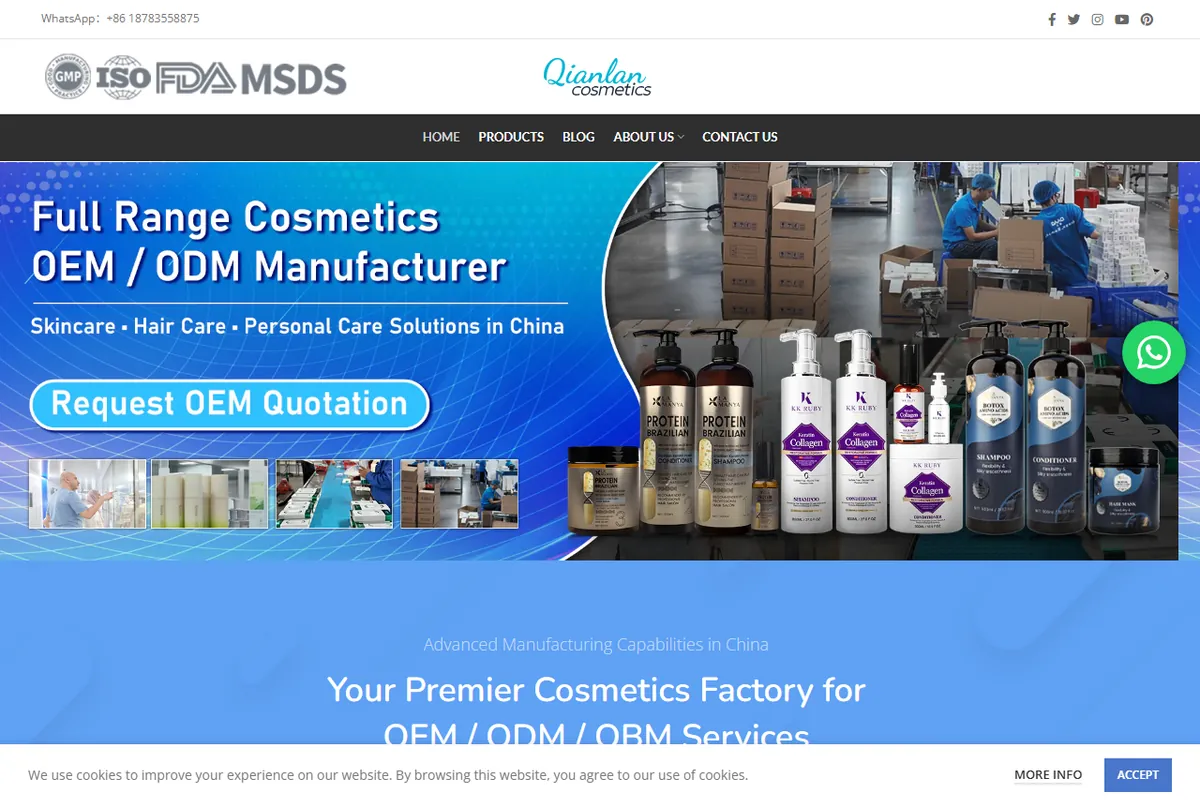
HQ: Guangzhou, China · Type: OEM/ODM full-range manufacturer · Best known for: Skincare, hair care and personal-care private label
Qianlan presents as a full-range OEM/ODM manufacturer serving skincare, hair-care and personal-care brands, with GMP, ISO, FDA and MSDS references displayed prominently and a quotation-led, export-focused site. It is a reasonable shortlist entry for straightforward private-label programmes, though it publishes less independently verifiable scale detail than the larger houses above — a reminder to request certificates and audit reports directly.
7. Guangzhou Kangwei Cosmetics
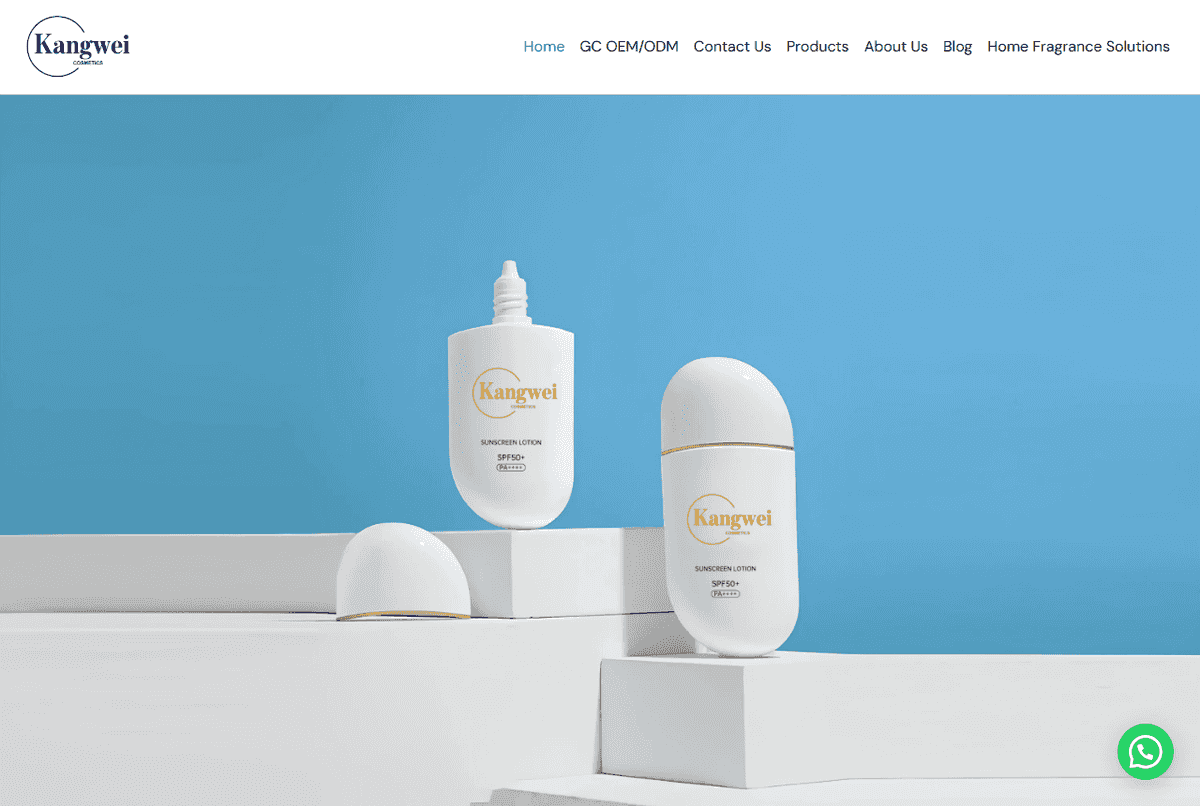
HQ: Baiyun, Guangzhou · Type: OEM/ODM manufacturer · Best known for: Skincare, sun care and home-fragrance solutions
Guangzhou Kangwei Cosmetics Manufacturing combines conventional skincare and colour-cosmetics OEM with a less common home-fragrance line, operating from a 100,000-class GMPC cleanroom and citing roughly 20 years of experience. It lists ISO 22716, GMPC and FDA references and an active international-trade team that exhibits across Southeast Asia. Brands wanting to bundle personal care with home-fragrance or diffuser products may find its category mix useful.
Visit Guangzhou Kangwei Cosmetics →
8. Metro Private Label
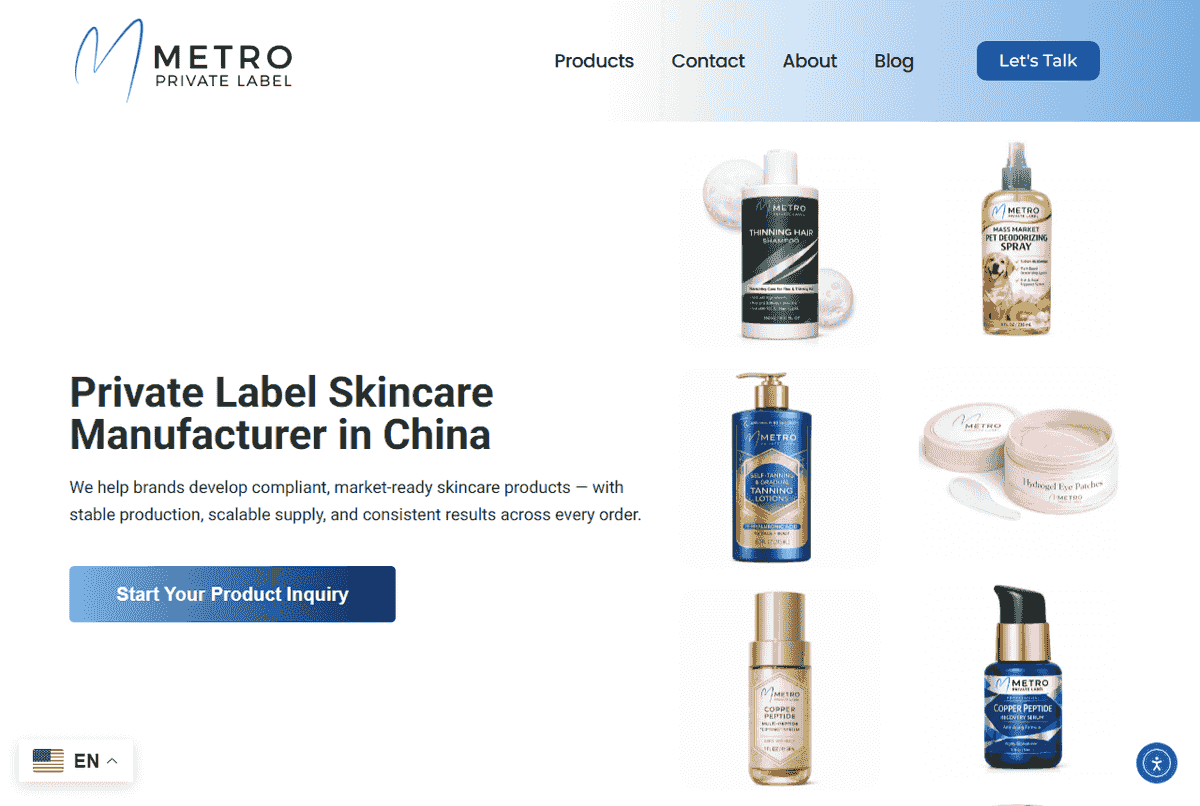
HQ: Huadu, Guangzhou · Type: Private-label / OEM skincare manufacturer · Best known for: Low-MOQ private-label skincare for indie brands
The international division of Guangzhou Baiyanhui Cosmetics Co., Ltd., Metro Private Label targets clinics, boutique brands and startups with GMPC-certified skincare and comparatively accessible minimums — it cites custom-branding MOQs around 500 pieces. It emphasises actives innovation and compliant, market-ready formulations. It is the most indie-friendly entry here for small first runs, with the trade-off that its published scale is smaller than the volume-focused factories above.
Notable exclusions
Several well-known names were considered and left off, which is part of how the screening worked. Nox Bellcow, a large Guangdong mask and skincare ODM, was excluded because its corporate domain did not resolve during our July 2026 review. Cosmax and Kolmar operate major factories in China but are headquartered in South Korea, so they belong to our South Korea coverage rather than this China list. A handful of other Guangzhou sites were dropped because their homepages returned blank, broken or modal-covered pages in headless capture — we only include companies whose live homepage screenshots came through clean, so that what you see here is what actually renders when a buyer visits.
Frequently asked questions
Is China a good place to manufacture cosmetics for my brand in 2026?
For most brands, yes. The Guangzhou/Guangdong cluster offers the widest range of formats, formula libraries and price points anywhere, and many factories hold GMPC and ISO 22716 credentials plus export documentation for the EU (CPNP) and US (FDA). The trade-offs are longer shipping lead times, the need to verify certifications first-hand, and China’s own registration rules if you also sell domestically. In practice, thorough vetting matters more than the country — our overseas-manufacturer vetting guide covers the checklist.
Which Chinese cosmetics regulator do I need to know about?
Cosmetics made and sold in China are governed by the National Medical Products Administration (NMPA) under the Cosmetic Supervision and Administration Regulation (CSAR), in force since 2021. CSAR splits products into “special” cosmetics (such as sunscreen, whitening and hair dye), which require NMPA registration, and “ordinary” cosmetics, which require notification. If you manufacture in China purely for export, your destination market’s rules — for example EU Regulation 1223/2009 or your home regulator — usually govern instead, but confirm who files what with your factory.
What MOQ should I expect from a Chinese OEM cosmetics factory?
It varies widely by factory and product. Indie-friendly houses such as Metro Private Label cite custom-branding minimums around 500 pieces, while volume-oriented factories often prefer several thousand units per SKU. Stock or “ready-to-customise” formulas almost always carry lower MOQs than fully bespoke formulations. Treat any single published figure as a starting point and get a written quote for your exact specification.
How do I verify a Chinese manufacturer is a real factory and not a trading company?
Ask for its business licence and GMPC / ISO 22716 certificates, confirm whether it owns the production lines or resells another factory’s output, and request third-party audit reports (SGS, Intertek or Bureau Veritas). Where possible arrange an in-person or live video factory tour, and order a paid sample to lab-test before you commit to a production run. Several companies on this list explicitly state they are direct manufacturers rather than traders — verify that claim rather than taking it at face value.
Methodology, limitations & update history
How this was researched: Candidate manufacturers were identified through web research in July 2026, each official website was opened and verified, and a live homepage screenshot was captured with headless Chrome. Companies whose sites failed to resolve, showed parked or placeholder pages, or were covered by consent modals during capture were excluded. Fact-checked by the oemhallmark editorial desk on 17 July 2026.
Limitations: This list is not exhaustive — China has thousands of registered cosmetics manufacturers, and inclusion here is not a guarantee of quality, capacity or compliance for your specific product. Certifications, factory sizes, patent counts and capacity figures are as published by each company and were not independently audited. MOQ, pricing and lead-time figures vary by product and change over time. Always conduct your own due diligence, request current certificates, and obtain written quotations before entering any manufacturing agreement.
Update history: 17 July 2026 — first published (8 manufacturers, homepages captured July 2026).
Sources: each company’s official website (linked above), reviewed July 2026; NMPA / Cosmetic Supervision and Administration Regulation (CSAR) for the regulatory framework. Screenshots are the property of the respective companies and are shown for identification and review purposes. oemhallmark is an independent industry review site.