Brazil is the largest cosmetics and personal care market in Latin America and one of the largest in the world, and it built a contract manufacturing sector to match. The Portuguese word you will see everywhere is terceirizacao — outsourced production — and it covers everything from a 300-unit private-label trial to multi-plant industrial groups filling millions of soap bars a year. This guide profiles ten Brazilian OEM and ODM cosmetic manufacturers whose official websites we opened, screenshotted and verified in August 2026, with what each is genuinely suited to and where a foreign buyer should push harder.
Key takeaways
- Brazil's contract manufacturing base clusters around Sao Paulo state, and specifically the Campinas corridor — Campinas, Indaiatuba, Valinhos and Vinhedo — which makes a multi-factory sampling trip unusually efficient.
- Hair chemistry is the country's genuine export specialism. Brazilian keratin, protein and nanoplastia smoothing systems are a category where Brazilian factories lead rather than follow.
- Minimums vary by an order of magnitude across this list, from a stated 300 units per SKU at the private-label end to tonne-scale industrialisation. Ask for MOQ by pack format, not by product.
- ANVISA classifies cosmetics as Grade 1 or Grade 2, and which one your product falls into determines your launch timeline far more than the factory's queue does.
- Export literacy is uneven. Some of these companies publish EU CPNP and FDA dossier support; others serve the domestic market almost exclusively. Screen for it early if you are not selling in Brazil.
How we chose: eligibility and method
This list was assembled in August 2026. Every company had to clear four screens before it could appear:
- It must be a Brazilian-based manufacturer that offers third-party production — terceirizacao, private label, full service or industrialisation — to other brands. Own-brand-only companies were excluded no matter how well known.
- Its own official website must resolve and render. We loaded each site in a clean headless browser at 1280×860 and captured the screenshots you see below. Sites that returned a parking page, a 404, a bot wall, an empty hero or a modal covering the content were dropped rather than published broken.
- Its stated address must be in Brazil. An SEO page targeting the Brazilian market is not a Brazilian factory; we checked the published address on each site.
- It must describe cosmetics or personal care as a core business, not as one incidental division.
The numbers below are labels, not a ranking. Entries are ordered alphabetically by company name. We did not audit any of these factories, test any product, or verify certifications against issuing bodies — capability claims, minimums, formula counts and certification lists are company-stated unless we say otherwise, and are labelled as such. Where a figure came from a public company register rather than the company's own site, we say so.
The list at a glance
| Company | Location | Best suited for |
|---|---|---|
| AGE do Brasil | Vinhedo, Sao Paulo | Brands that need production plus customs, warehousing and regulatory handled by one counterparty |
| Eco Beauty | Campinas, Sao Paulo | Brazilian keratin, nanoplastia and professional smoothing systems for export |
| Florus Brasil | Indaiatuba, Sao Paulo | First-time brand owners who want an off-the-shelf formula base plus regulatory hand-holding |
| HRT Cosmeticos | Campinas, Sao Paulo | Small launches and DTC brands testing a line at 300 units per SKU |
| Larimar Cosmeticos | Novo Hamburgo, Rio Grande do Sul | Creams, professional-salon lines and small-batch work outside the Sao Paulo cluster |
| Leclair Cosmeticos | Sao Jose dos Pinhais, Parana (plus a unit in Bauru, Sao Paulo) | Volume industrialisation: bar soaps, creams and lotions, plus kit and case assembly |
| Lipson Cosmeticos | Diadema, Sao Paulo | Colour cosmetics alongside skin, sun, hair and fragrance under one roof |
| Private Cosmeticos | Valinhos, Sao Paulo | Export-minded brands needing EU, Middle East or North America paperwork alongside production |
| Revitale Cosmeticos | Guarulhos, Sao Paulo | Fragrance, body splash and home-fragrance lines with published minimums |
| Universal Chemical | Sarapui, Sao Paulo | Retailer and wholesaler private label at supermarket volume |
How cosmetics are regulated in Brazil
Brazil's cosmetics regulator is ANVISA, the Agencia Nacional de Vigilancia Sanitaria. Two things about the Brazilian system surprise foreign buyers.
The first is the Grade 1 / Grade 2 split. Products judged to carry minimal risk — many shampoos, ordinary moisturisers, most colour cosmetics — sit in Grade 1 and clear through a lighter notification route. Products making specific functional claims or carrying higher risk — sunscreens, anti-acne products, children's products, hair straighteners, insect repellents — sit in Grade 2 and require registration with a supporting technical dossier. A factory quoting you eight weeks is almost always quoting a Grade 1 timeline.
The second is that the company holding the ANVISA authorisation is the one legally responsible for the product in Brazil, not the brand whose name is on the label. If your contract manufacturer notifies the product under its own authorisation, you have a commercial dependency that is awkward to unwind later. Settle who holds the registration before you sign, and read our questions to ask before signing an OEM contract first.
Manufacturing itself is inspected against ANVISA good manufacturing practice requirements, which are aligned in substance with ISO 22716. Brazil is also a MERCOSUR member, so harmonised MERCOSUR technical regulations underpin much of the framework — useful if Argentina, Uruguay or Paraguay are also on your map. If you are exporting out of Brazil, the factory needs registration in Siscomex to ship directly.
1. AGE do Brasil
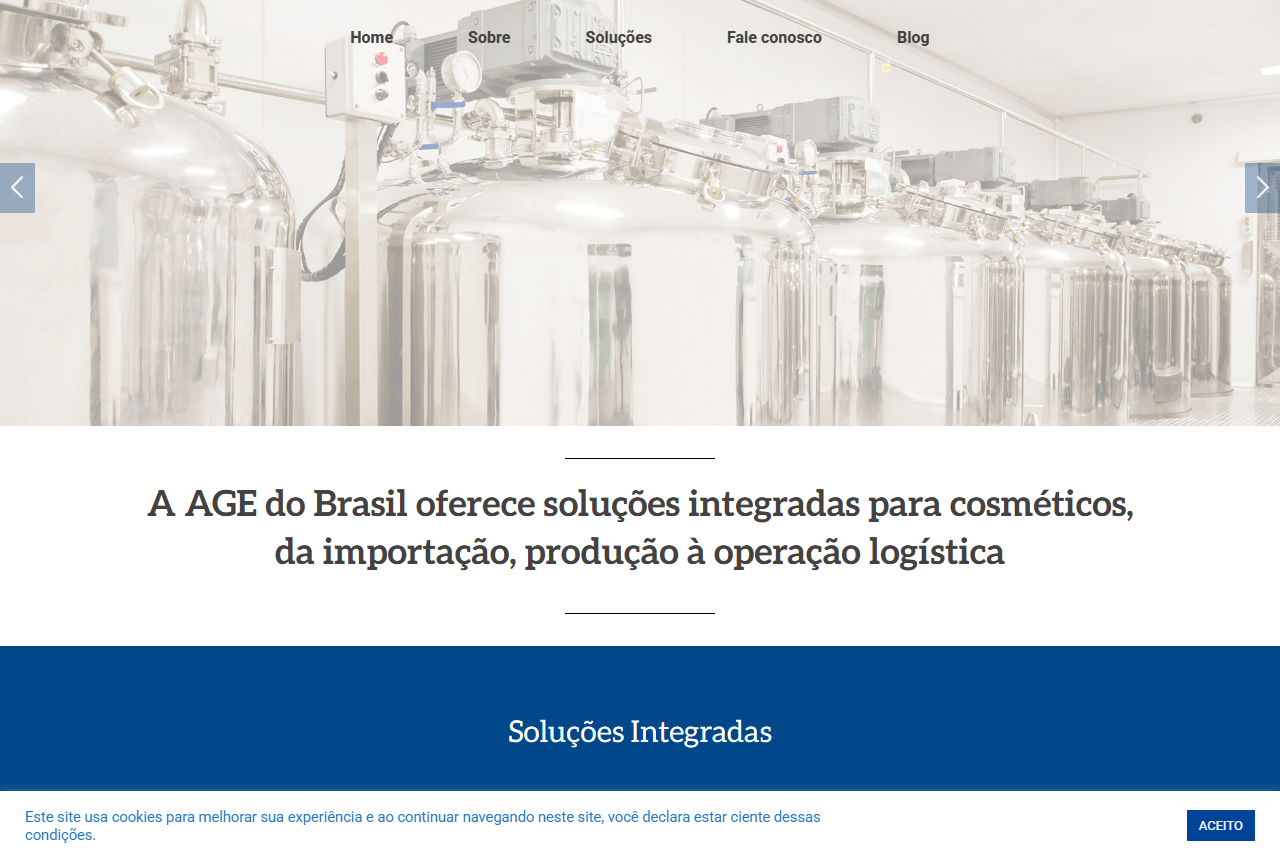
HQ: Vinhedo, Sao Paulo · Type: Full-service contract manufacturer & import/logistics operator · Best known for: Brands that need production plus customs, warehousing and regulatory handled by one counterparty
AGE do Brasil sells itself less as a factory than as an operating platform: the company describes integrated solutions spanning importation, production and logistics, with legal, accounting and regulatory support attached. For a foreign brand that wants to sell into Brazil rather than merely manufacture there, that combination matters more than it sounds — import licensing, tax substitution and ANVISA notification are usually three separate vendors.
The trade-off is that a company built around breadth is rarely the deepest formulator in any one category. If your product needs a genuinely novel emulsion or an unusual actives system, ask early whether the R&D sits in-house or is brokered. Vinhedo puts the site inside the Campinas industrial corridor, roughly 80 km from Sao Paulo city and close to Viracopos airport.
2. Eco Beauty
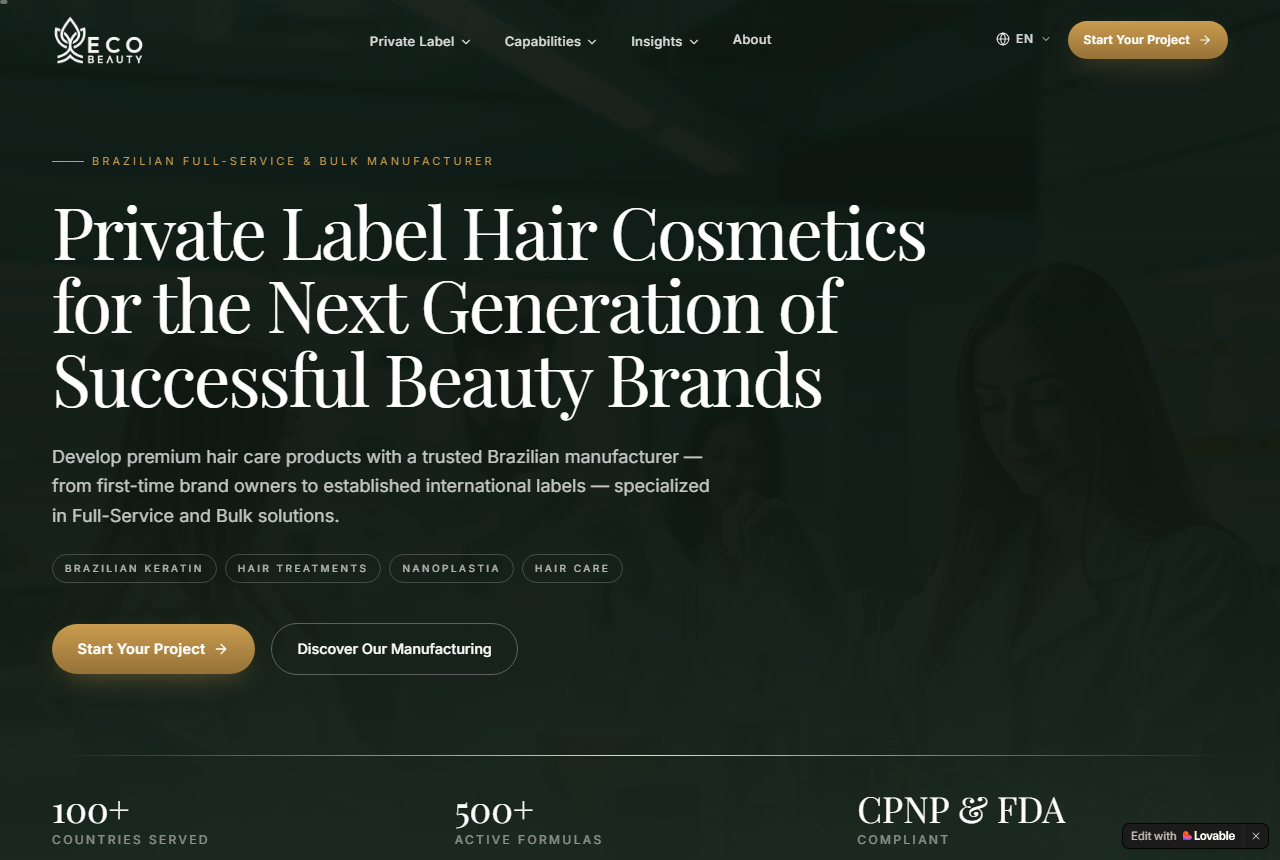
HQ: Campinas, Sao Paulo · Type: Private-label and bulk manufacturer, hair category · Best known for: Brazilian keratin, nanoplastia and professional smoothing systems for export
Eco Beauty is the clearest example on this list of Brazil exporting what it is actually famous for. The company is built around professional hair smoothing and treatment chemistry — keratin, protein and nanoplastia systems, bleaches, scalp treatments and curl activators — and states a minimum of 300 litres per SKU under both full-service and bulk models. Company-stated reach is over 100 countries.
Usefully for brands outside Latin America, the site advertises dossier work aimed at EU Regulation 1223/2009 and CPNP notification alongside MERCOSUR support, which is a more export-literate posture than most Brazilian contract manufacturers take. Treat the compliance claims as a starting point rather than a substitute for your own safety assessment and CPSR: the responsible person in your market is you, not the factory.
3. Florus Brasil
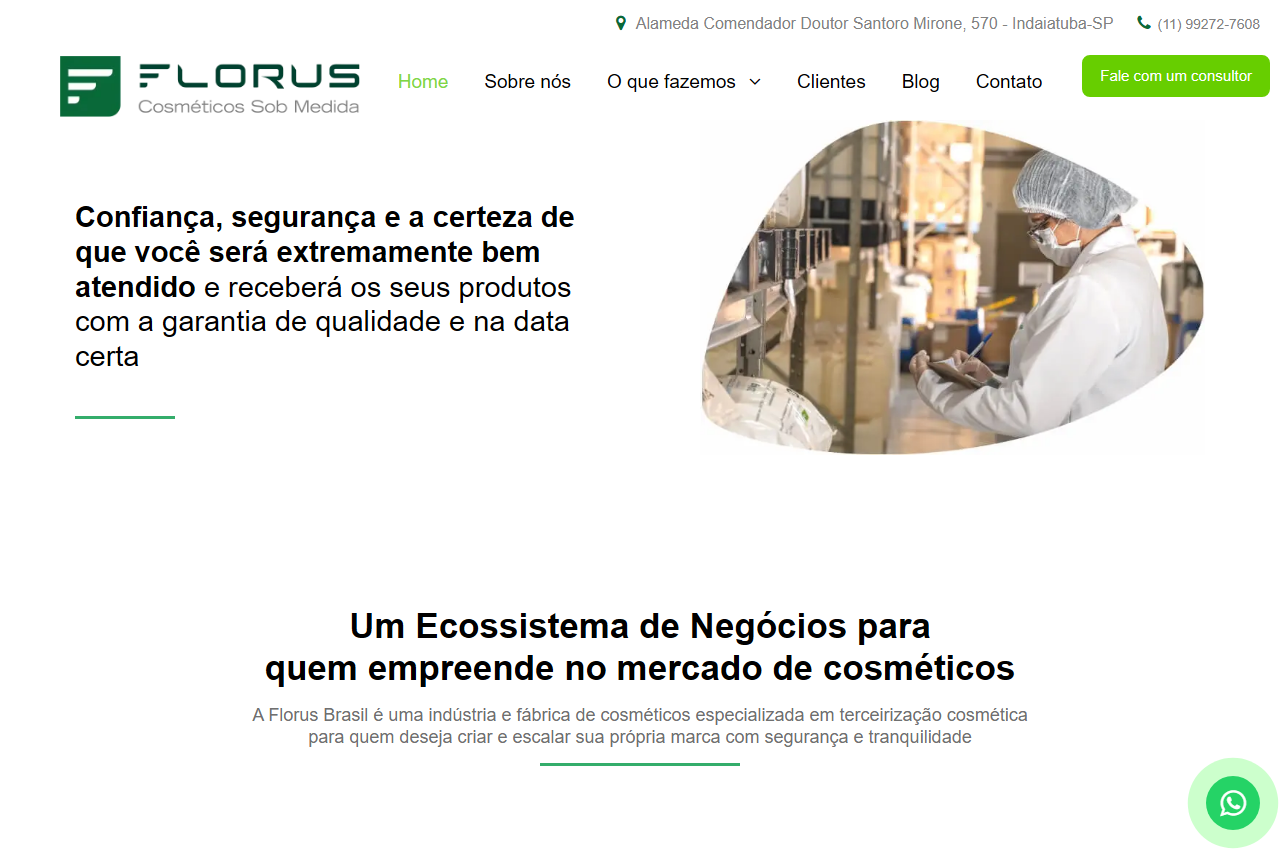
HQ: Indaiatuba, Sao Paulo · Type: Terceirizacao (contract manufacturing) with formula library · Best known for: First-time brand owners who want an off-the-shelf formula base plus regulatory hand-holding
Operating since 2002, Florus positions itself as an ecosystem for people starting a cosmetics brand rather than a pure job-shop. Company-stated figures on the site include 600+ brands served, 3,600+ available formulas and capacity above 20,000 units per day, plus explicit ANVISA guidance and export advisory. That formula library is the practical draw: it collapses development time for a founder who does not need a bespoke emulsion.
Indaiatuba sits in the same Campinas cluster as Eco Beauty and HRT, which makes multi-vendor sampling trips efficient. As always with a stock-formula house, read the exclusivity terms before you build a brand on a base that anyone else can also buy — the distinction between a shared formula and an owned one is the core of the OEM, ODM and private-label split.
4. HRT Cosmeticos
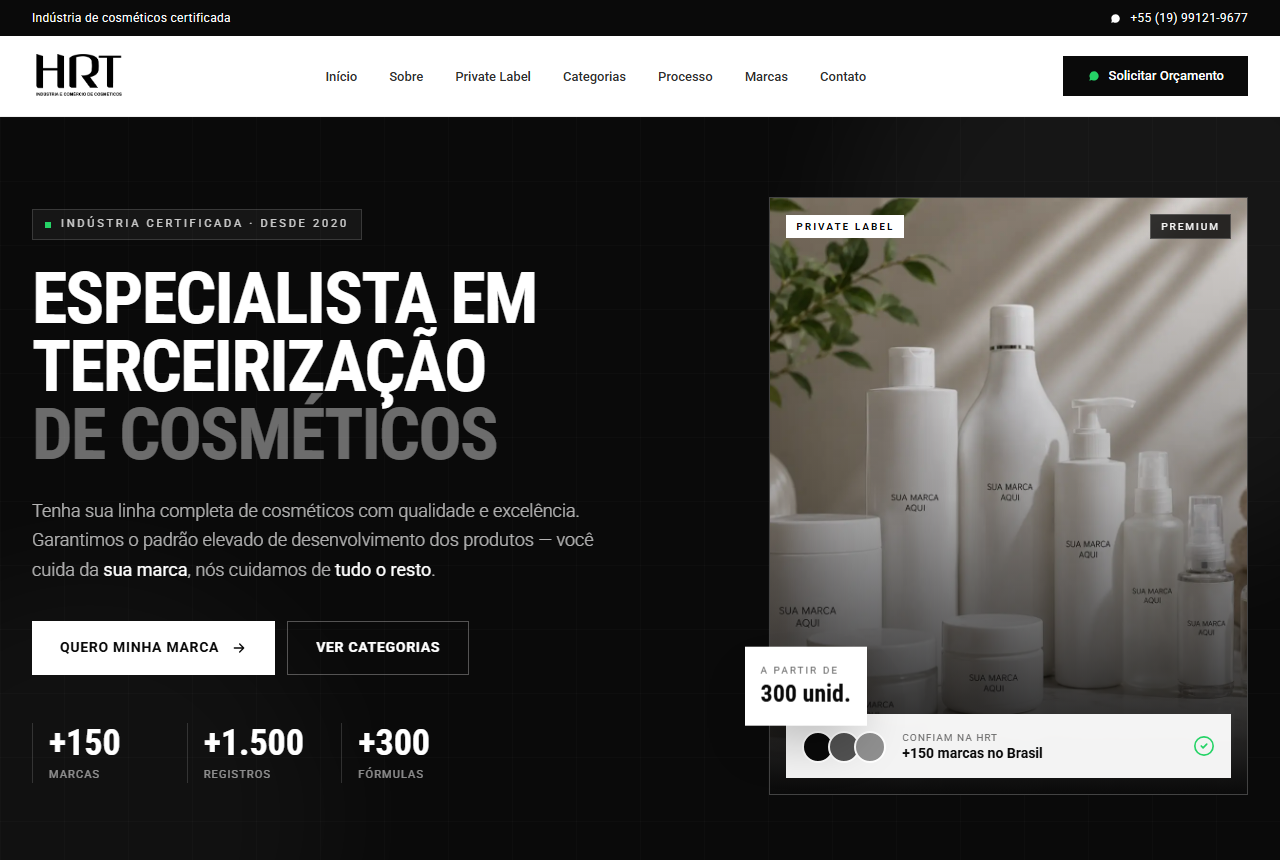
HQ: Campinas, Sao Paulo · Type: Private-label industry, low minimums · Best known for: Small launches and DTC brands testing a line at 300 units per SKU
HRT is the newest company on this list — its own structured data gives a founding date of 2020 — and it has built its offer squarely around the low-minimum end of the market: a stated 300-unit starting batch, 300+ formulas and 150+ brands served. For a brand validating a concept before committing capital, that entry point is meaningfully lower than the tonne-scale minimums of the older industrial players here.
The obvious caution is tenure. A 2020 founding means a shorter audited history than a Larimar or a Lipson, so the usual diligence — ANVISA authorisation number, GMP inspection status, references from brands two or three years in — is worth doing properly. Our guide to vetting an overseas manufacturer covers what to ask for and in what order.
5. Larimar Cosmeticos
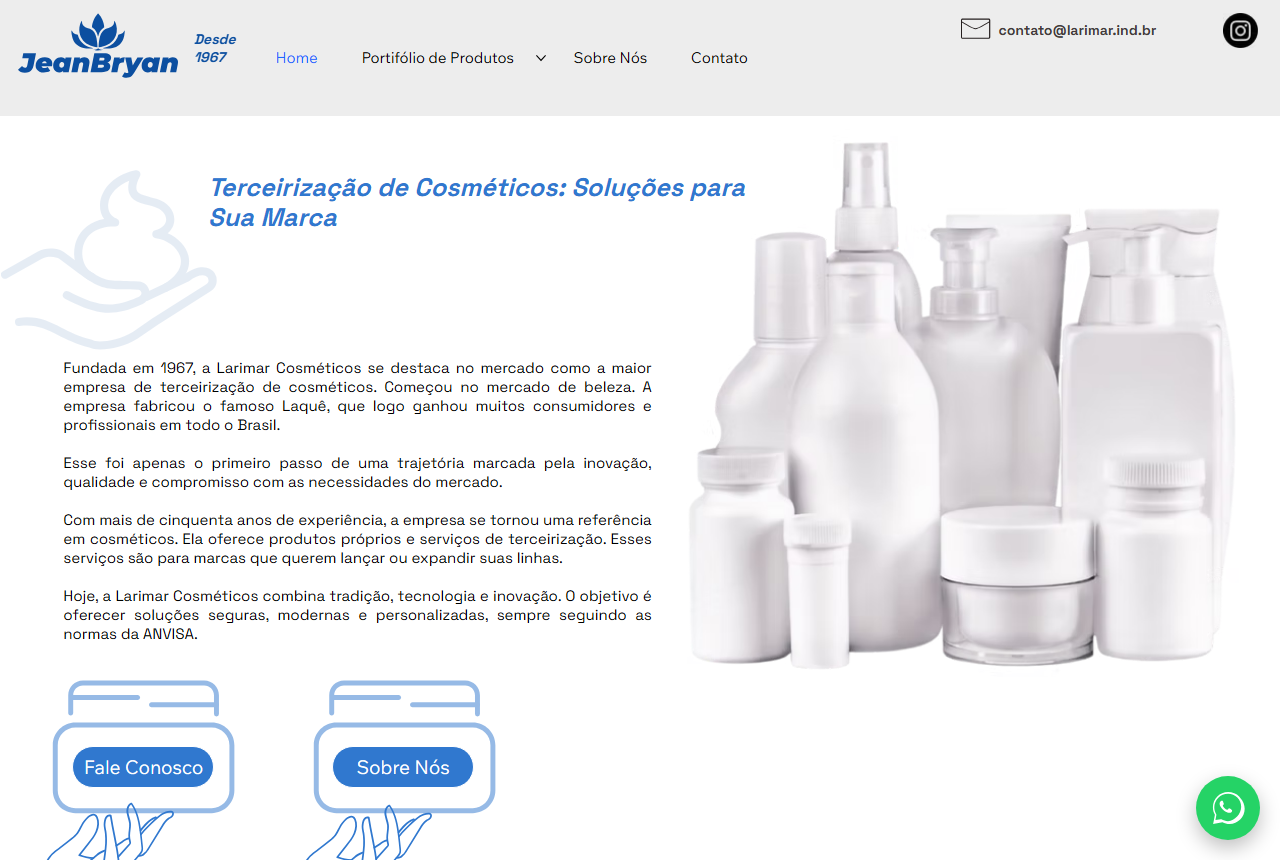
HQ: Novo Hamburgo, Rio Grande do Sul · Type: Long-established contract manufacturer with own brand (Jean Bryan) · Best known for: Creams, professional-salon lines and small-batch work outside the Sao Paulo cluster
Founded in 1967, Larimar is the oldest company on this list and the only one based in the far south, in the Novo Hamburgo leather-and-industry belt near Porto Alegre. Its published portfolio runs to 120+ products across body, hand, massage and protective creams, deodorants, hair and professional lines, sun care and vegan options, and it markets explicitly to brands wanting small production runs — unusual for a company of that age.
Note that Larimar also runs its own consumer brand, Jean Bryan, which dominates the website's visual identity. That is not disqualifying — plenty of good contract manufacturers do both — but it is worth asking directly how capacity is allocated between the house brand and client work when a season gets tight.
6. Leclair Cosmeticos
HQ: Sao Jose dos Pinhais, Parana (plus a unit in Bauru, Sao Paulo) · Type: Industrial HPPC group, multi-plant · Best known for: Volume industrialisation: bar soaps, creams and lotions, plus kit and case assembly
Grupo Leclair is the most conventionally industrial name here — a multi-site HPPC (personal hygiene, perfumery and cosmetics) group with its main operation in Sao Jose dos Pinhais in the Curitiba metropolitan area and a further unit in Bauru, plus separate storage and packaging facilities. Bar soap is a genuine specialism, and soap is a category most private-label houses will not touch because it needs different plant entirely.
Leclair also runs kit and case assembly, which matters more than it sounds for gift sets, subscription boxes and retail promotions where the packing labour, not the bulk, is the constraint. This is a volume operation, so expect minimums and commercial terms pitched at established brands rather than launches.
7. Lipson Cosmeticos
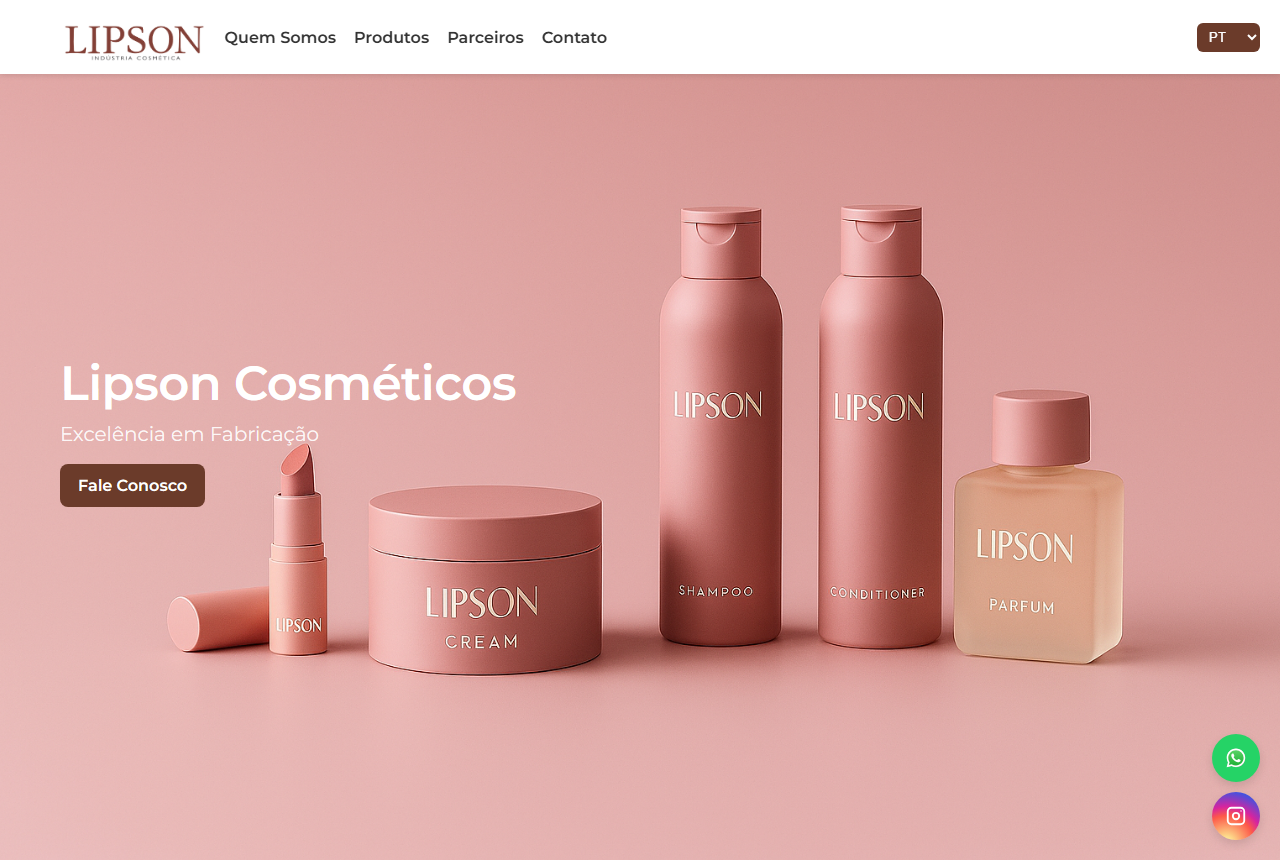
HQ: Diadema, Sao Paulo · Type: Full-service and industrialisation contract manufacturer · Best known for: Colour cosmetics alongside skin, sun, hair and fragrance under one roof
With 30+ years in the ABC industrial belt south of Sao Paulo, Lipson offers the two-model structure that experienced buyers look for: full service, where the factory develops the formula and takes the product from concept to delivery, and industrialisation, where you bring your own formula and specification and buy manufacturing capacity only. The second model is what you want once you own your IP.
Make-up is listed as a distinct line alongside body, skin, sun, hair, fragrance and sampling, and the company describes in-house quality control, microbiology, quality assurance, regulatory affairs and R&D departments. Colour is the hardest category to source well in Latin America, so a factory that keeps microbiology and RA in-house rather than outsourcing them is worth a site visit.
8. Private Cosmeticos
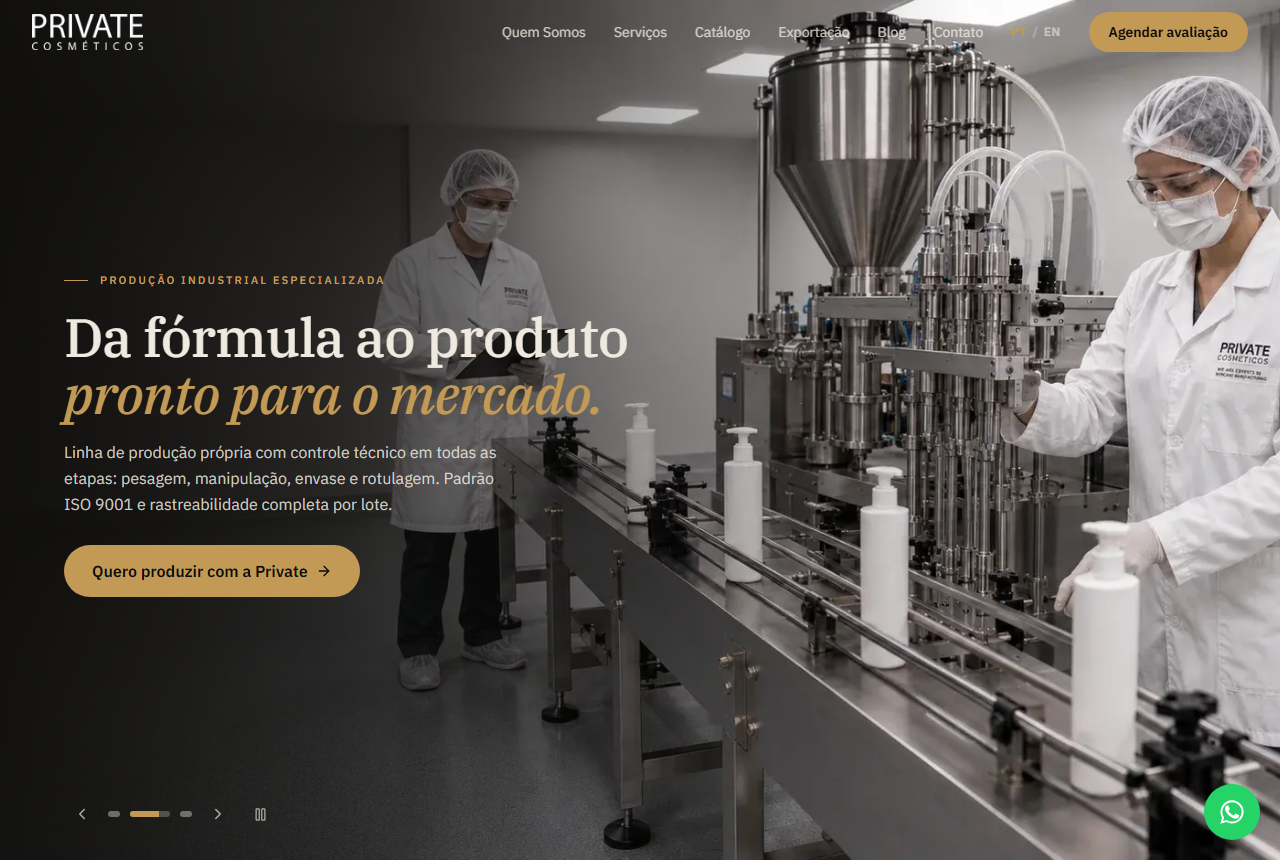
HQ: Valinhos, Sao Paulo · Type: Full-service manufacturer with export documentation focus · Best known for: Export-minded brands needing EU, Middle East or North America paperwork alongside production
Private Cosmeticos publishes the most export-ready documentation posture of the ten: ISO 9001 alongside ANVISA, and company-stated support for CPNP, FDA and Halal files, with technical dossiers it says are adaptable for the European Union, Middle East and North America. Company-stated experience is 200+ brands developed across ten product lines, including intimate care, kids and sun care.
An English-language site and a bilingual toggle are a small signal, but a real one — it usually means the commercial team has handled foreign buyers before. Verify each certificate individually rather than accepting the list: an ISO 9001 certificate covers a quality management system, not cosmetic GMP, and the two are frequently conflated in supplier marketing.
9. Revitale Cosmeticos
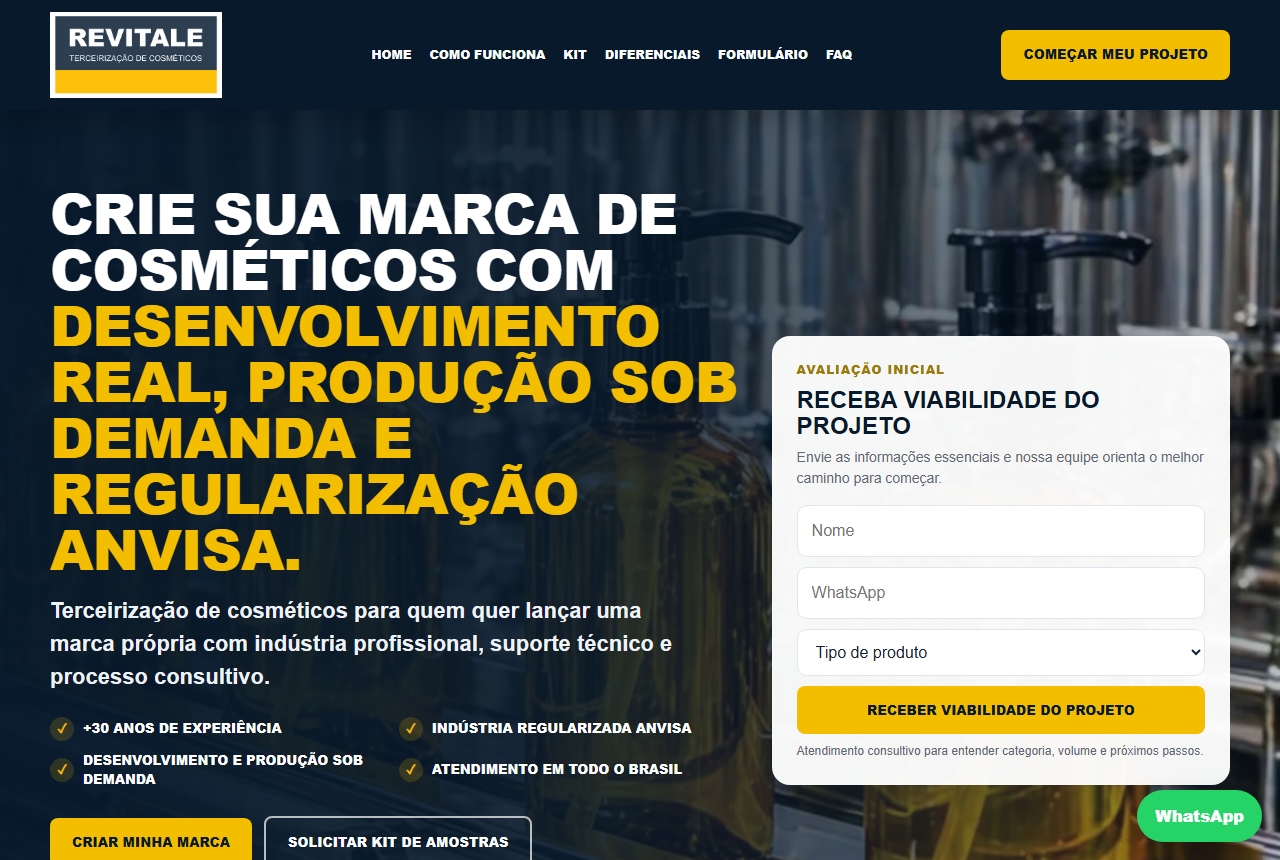
HQ: Guarulhos, Sao Paulo · Type: Terceirizacao and private label, consultative model · Best known for: Fragrance, body splash and home-fragrance lines with published minimums
Revitale states 30+ years in the market and is unusually transparent about minimums, publishing them by pack format: 300 units for perfumes, body splash, shampoos and conditioners, 500 for pump bottles and jars, and 1,500 for tubes, with the caveat that they vary by category. Publishing MOQs at all is rare enough in this sector to be worth noting — most factories make you ask.
The catalogue leans towards fragrance and scented body products, plus diffusers and essential oils, which fits Brazil's outsized domestic perfumery market. Revitale also describes handling ANVISA regularisation across both the simplified (Grade 1) and test-heavy (Grade 2) product classifications, a distinction that decides your launch timeline more than any other single factor.
10. Universal Chemical
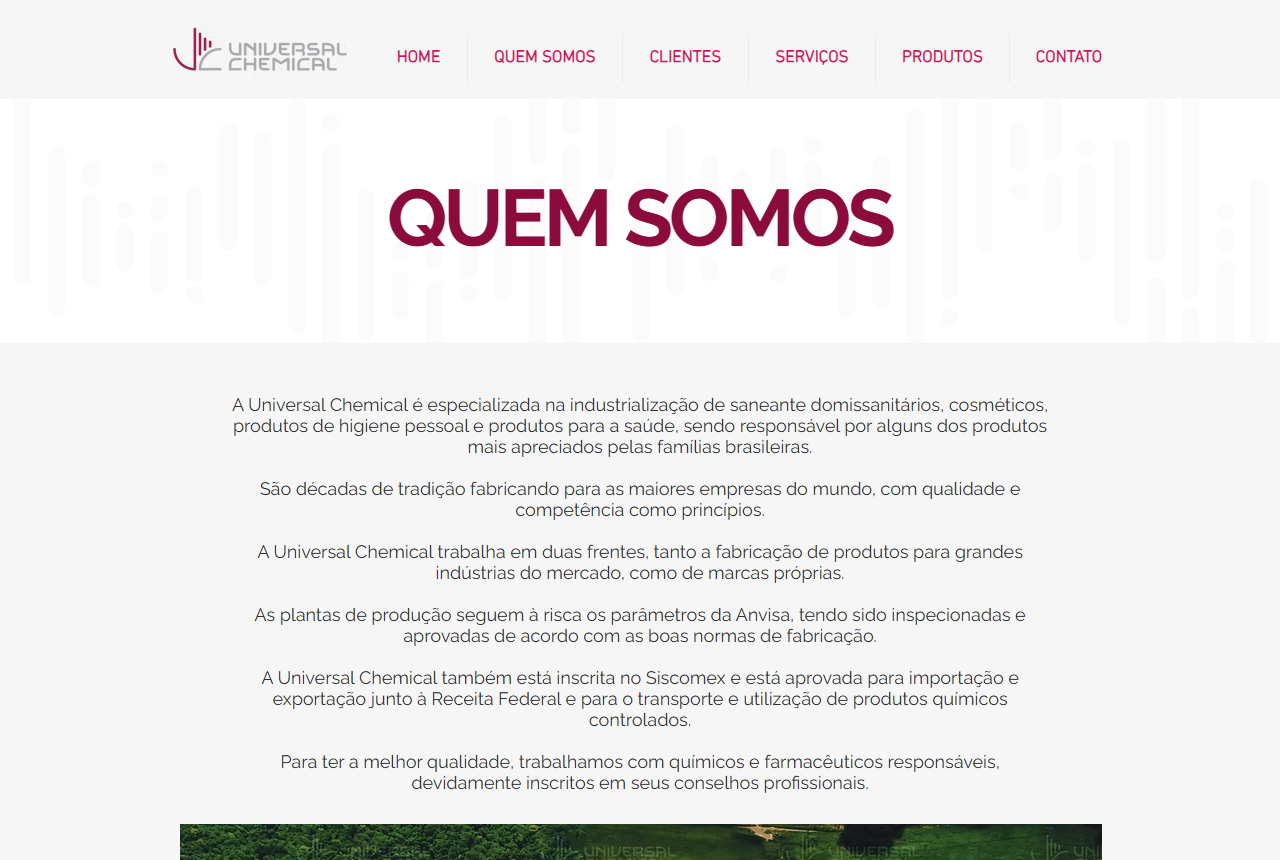
HQ: Sarapui, Sao Paulo · Type: Large-scale industrialisation: sanitisers, cosmetics, personal care, health products · Best known for: Retailer and wholesaler private label at supermarket volume
Universal Chemical is the outlier: a chemical industrialisation business that manufactures household sanitisers and health products alongside cosmetics and personal care, and openly describes working on two fronts — contract production for large industries and private label for retail. Public company records put its incorporation in 1990 and its plant in Sarapui, in the Sorocaba region of Sao Paulo state.
The site notes ANVISA-inspected production plants and registration in Siscomex, Brazil's foreign trade system, which is the practical prerequisite for a factory to export directly rather than through an agent. This is not a boutique beauty developer; approach it for volume, not for a novel serum.
Notable exclusions
Fourteen Brazilian companies were researched for this list. Four were dropped, and the reasons are worth publishing because they show what the screen actually caught:
- LH Industria (lhindustria.com.br) — a real contract manufacturer, but its homepage renders as a largely blank page in a headless browser even at a 30-second virtual time budget, apparently because of a scroll-triggered reveal animation. We could not produce an honest screenshot, so it was dropped rather than shown broken.
- Lew Cosmeticos (lewcosmeticos.com.br) — same problem on the homepage and on two interior pages we tried: navigation renders, body content does not.
- Suport Cosmeticos (suportcosmeticos.com.br) — the site loads and the company is genuine, but its hero banner image was broken on every attempt, leaving a placeholder icon at the top of the page.
- TC / Terceirizacao Cosmeticos (terceirizacaocosmeticos.com.br) — captured cleanly and would have qualified, but we capped the list at ten and it was the least distinct of the eleven that passed.
We also did not include Brazil's famous consumer beauty names — Natura, O Boticario, Grupo Boticario's brands and similar — because they manufacture for themselves. A brand that does not sell third-party production capacity does not belong on a list of OEM/ODM manufacturers, however large it is.
Frequently asked questions
What does "terceirizacao de cosmeticos" mean, and is it the same as OEM?
Terceirizacao is the standard Brazilian term for outsourced manufacturing, and it maps closely onto what English speakers call contract manufacturing. In practice Brazilian factories split it two ways: full service, where the factory develops the formula, sources packaging and handles registration (closer to ODM or private label), and industrializacao, where you supply the formula and specification and buy manufacturing capacity only (closer to pure OEM). Ask which model a quote refers to, because the price, the lead time and who owns the formula all differ.
What is the minimum order quantity for cosmetics manufacturing in Brazil in 2026?
It varies enormously by factory and by pack format, so treat any single number with suspicion. At the private-label end of this list, HRT publishes a starting batch of 300 units per SKU and Revitale publishes 300 units for perfumes and shampoos, 500 for pump bottles and jars, and 1,500 for tubes. Bulk suppliers quote by volume instead — Eco Beauty states 300 litres per SKU. Large industrial groups such as Leclair and Universal Chemical work at far higher volumes. All of these are company-stated as of August 2026 and change with packaging availability.
Do I need ANVISA approval if I manufacture in Brazil but sell abroad?
The manufacturing site itself must hold valid ANVISA authorisation and meet good manufacturing practice requirements, and for direct export it needs Siscomex registration. But your product is regulated by the market you sell into: an EU sale needs a responsible person, a safety assessment and CPNP notification regardless of where it was made, and other markets have their own regimes. Several factories on this list say they help prepare export dossiers, but the legal responsibility for compliance in your destination market sits with you, not with the Brazilian factory.
Why is Brazil known for hair products specifically?
Brazil has an unusually large professional haircare market and decades of formulation work on smoothing, straightening and curl treatments — the reason "Brazilian keratin" and nanoplastia became international category names rather than local ones. That depth is concentrated: several Brazilian factories will out-formulate a European or Asian equivalent on a smoothing system while being ordinary on, say, colour cosmetics. Match the factory to the category rather than assuming national strength transfers across a catalogue.
Methodology, limitations and sources
What we did. Candidate companies were identified through Portuguese and English web research in August 2026. Each official website was requested directly and captured in a clean headless Chrome session at 1280×860. Company facts — location, founding year, services, categories, stated minimums and certifications — were read from each company's own website, except where noted: Universal Chemical's 1990 incorporation date and Sarapui plant address come from public Brazilian company records, and HRT's 2020 founding date comes from the structured data its own site publishes.
What we did not do. We did not visit or audit any factory, inspect any quality system, test any product, verify any certificate against its issuing body, or solicit or accept payment from any company listed. Minimums, capacities, formula counts, brand counts and certification claims are company-stated and were accurate to the published sources on 14 August 2026; they change. Two of these companies, Universal Chemical and Leclair, screenshot their sites through interior pages in one case — Universal Chemical's "Quem Somos" page was captured because its homepage hero does not resolve in a headless browser. Verify anything commercially material directly with the company before you act on it.
How to use this list. Shortlist by category fit and minimum, then run the same diligence you would anywhere: ask for the ANVISA authorisation number and check it, ask who holds the product registration, ask for a pre-production test panel in writing, and settle payment terms and deposits before tooling. If Brazil turns out to be the wrong fit on freight or lead time, our comparable guides to Canada, the USA, Poland and Turkey cover the same ground in other markets, and the OEMHallmark manufacturer directory lists companies across regions.
Update history. 14 August 2026 — first published. Fourteen companies researched, fourteen captured, ten published.
Sources: each company's official website (linked above, accessed 14 August 2026); ANVISA cosmetics portal; ABIHPEC (Brazilian Association of the Personal Hygiene, Perfumery and Cosmetics Industry); Siscomex; ISO 22716:2007. Written and researched by Priya Nair. Fact-checked by Marcus Tan. Last reviewed 14 August 2026. Screenshots were captured by OEMHallmark from each company's public homepage and are reproduced for identification and review purposes.
Comparing Latin American production bases? Our list of OEM/ODM cosmetic manufacturers in Mexico sets out the other major contract-manufacturing cluster in the region — a lighter regulatory load than ANVISA’s Grade 1/Grade 2 split, and duty-free road freight into the United States and Canada.