Mexico has quietly become one of the most practical places in the Americas to have a beauty product made. It sits inside the USMCA free-trade area, it has a domestic beauty market worth roughly USD 17–18 billion, and it has a deep bench of independent maquiladoras — contract laboratories that formulate, fill and finish other companies’ brands. What it does not have is a tidy English-language directory of those laboratories. This guide fixes that for ten of them.
Written and researched by Evelyn Chong, Cosmetic Chemist & OEM Industry Analyst · Fact-checked by Marcus Tan, Private Label & Beauty Sourcing Consultant · Research period: 18–24 August 2026.
Quick answer: who makes cosmetics on contract in Mexico?
Ten Mexican contract laboratories with verified, live corporate websites are profiled below: Cosmética Lab Natural, CosmetiLab 18, Eureka Cosmética, Gardenia Naturals Labs, Helleskin Laboratorios, IMAQ Industrial Maquiladora, Laboratorios Anteii, Naturalcare Cosmetics Lab, OMC — Organik Maquiladora Cosmética, and Tecnología Cosmética. Between them they cover skincare, hair care, colour cosmetics, sun care, fragrance and naturals, with published entry points ranging from 10-unit ready-to-label stock up to full custom OEM development. All ten operate under Mexico’s COFEPRIS regime and the NOM-259-SSA1-2022 good-manufacturing-practice standard. The list is alphabetical, not ranked.
Key takeaways
- Mexico’s contract-manufacturing sector is dominated by mid-size independents, not global CDMOs. Unlike Canada or Poland, there is no single dominant contract manufacturer — the sector is made up of laboratories in Jalisco, Estado de México, Guanajuato and Mexico City, most employing tens rather than thousands of people.
- Entry MOQs are unusually low by global standards. Two of the ten publish figures: Gardenia Naturals Labs lists ready-to-label from 10 pieces and private label from 100, and Tecnología Cosmética states a minimum project value of MXN 50,000 rather than a unit count. That is a very different starting point from the 5,000-unit floors common in Guangdong or South Korea.
- COFEPRIS regulates by facility notice, not product pre-approval. A Mexican cosmetics factory files an Aviso de Funcionamiento; individual cosmetic products are generally not pre-registered. That speeds up launches but shifts more of the safety burden onto the brand owner.
- ISO 22716 is not the Mexican benchmark — NOM-259 is. COFEPRIS has clarified that enforcement follows NOM-259-SSA1-2022, not ISO 22716. Several of the laboratories here hold ISO certificates anyway because they export.
- Website quality is a poor proxy for factory quality here. Two of the most technically capable candidates we researched had the thinnest websites, and two companies still cited as live in other English round-ups had expired or deactivated domains. Verify directly.
Who this list is for, and how we chose
This list is written for a brand owner deciding whether to place a first or second production run in Mexico — typically an independent beauty brand in Mexico, the United States or Canada looking to nearshore, or an overseas brand trying to reach Latin American retail without importing finished goods.
We applied four eligibility rules before writing a word of the entries:
- Contract manufacturing must be an offered service. The company must publicly offer maquila, private label, OEM or ODM production for third-party brands. Own-brand-only cosmetics houses were excluded even when large.
- The company must physically manufacture or formulate in Mexico. Trading companies, sourcing agents and SEO landing pages targeting “cosmetics manufacturer Mexico” from outside the country were excluded — a lesson we learned the hard way on an earlier country list.
- The official website must resolve and render. Every entry below was loaded in a clean headless browser at 1280×860 on 24 August 2026 and screenshotted. Parked domains, expired domains, deactivated site-builder pages, bot walls and shots where a pop-up covered the hero were rejected, not retouched.
- Cosmetics must be a core line, not an afterthought. Multi-category chemical maquiladores whose personal-care work sits alongside cleaning chemicals or water treatment were moved to the exclusions section.
The numbers below are labels, not a ranking. The ten companies are listed alphabetically. We did not audit any factory, test any product, or verify certificates against issuing bodies — certifications are reported as the company states them, and are described that way in each entry. If you want the general framework we apply to any overseas factory before placing an order, we set it out in our guide to vetting an overseas cosmetics manufacturer.
The list at a glance
| Company | Base | Best suited for | Main limitation |
|---|---|---|---|
| Cosmética Lab Natural | Mexico (city not published) | Naturals, herbal and aromatherapy lines | Very broad catalogue; cosmetics sit beside supplements |
| CosmetiLab 18 | Mexico | Multi-category filling under one roof | ISO 22716 listed as in progress, not held |
| Eureka Cosmética | Zapopan, Jalisco | First-time brand founders | No certifications published on site |
| Gardenia Naturals Labs | Guadalajara, Jalisco | Very low MOQ launches and US/Canada paperwork | Retail/e-commerce front end can obscure the OEM offer |
| Helleskin Laboratorios | Mexico (city not published) | Cosmetics plus dietary supplements together | Little published detail on plant or capacity |
| IMAQ Industrial Maquiladora | Naucalpan de Juárez, Edo. de México | Colour cosmetics with in-house packaging | No certifications published on site |
| Laboratorios Anteii | Jalisco | Skin, body and hair care with export paperwork | Explicitly does not make colour cosmetics |
| Naturalcare Cosmetics Lab | Metepec, Edo. de México | Bulk sun care and repellent; documented compliance | Young company (site dates to 2020) |
| OMC — Organik Maquiladora Cosmética | León, Guanajuato | Broad formats plus decoration and labelling | Claims to make “any” cosmetic — scope worth testing |
| Tecnología Cosmética | Ciudad de México | Established brands and fragrance work | Project minimum stated in value, not units |
What COFEPRIS expects before you produce in Mexico
Mexico’s cosmetics regulator is COFEPRIS — the Comisión Federal para la Protección contra Riesgos Sanitarios, part of the federal health ministry. Three things about the Mexican system tend to surprise brands arriving from the EU, ASEAN or the United States.
First, the factory is licensed, not the product. A cosmetics manufacturer files an Aviso de Funcionamiento (operating notice) with COFEPRIS. Individual cosmetic products are generally not subject to pre-market registration the way they are under an ASEAN notification or a Chinese NMPA filing. This is why a Mexican laboratory can put a new SKU on shelf quickly — and why the brand owner, not the state, is the party carrying the safety file.
Second, good manufacturing practice is set by NOM-259-SSA1-2022, published in July 2022 and in force since July 2023. It covers personnel, premises, equipment, raw materials, quality control and transport. COFEPRIS has clarified that a GMP certificate is not mandatory and that enforcement is based on NOM-259 and the sanitary-risk framework rather than on ISO 22716. Several laboratories on this list nonetheless carry ISO certificates, because their export customers ask for them.
Third, labelling is its own standard. NOM-141-SSA1/SCFI-2012 governs cosmetic labelling and packaging information in Mexico, including Spanish-language requirements and net-content declaration. If you are exporting the same formula elsewhere, the artwork will need a separate pass; our tutorial on setting up cosmetic labels for compliance covers how brands usually manage multi-market artwork without re-running the whole print job.
A practical note for anyone comparing Mexico with the two markets next door: because the safety dossier stays with the brand, a Mexican production run does not automatically generate the documentation an EU or UK importer will ask for. If either of those is on your roadmap, commission the cosmetic product safety report alongside the production run rather than after it.
1. Cosmética Lab Natural
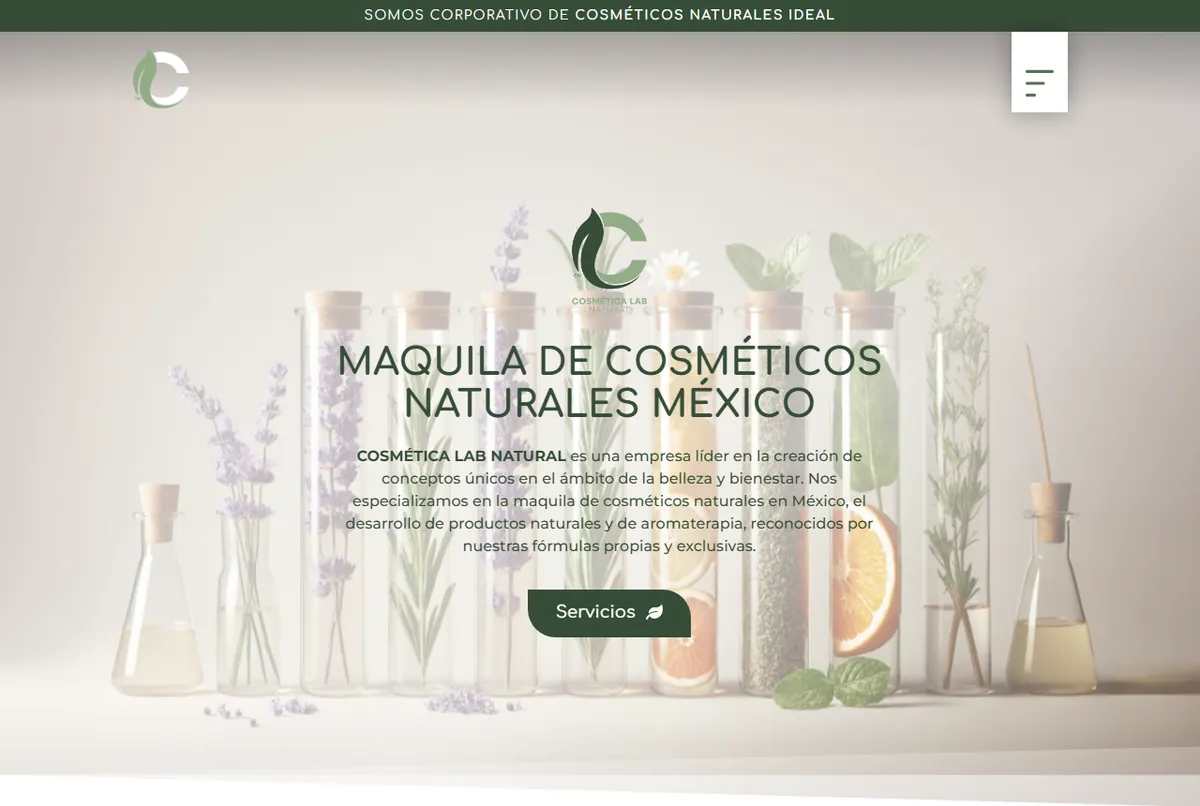
HQ: Mexico (city not published on its website) · Type: Contract manufacturer, naturals-focused · Best known for: Natural, herbal and aromatherapy formulations
Cosmética Lab Natural presents itself as part of Corporativo de Cosméticos Naturales Ideal and builds its offer around natural cosmetics, aromatherapy and herbal preparations, stating a catalogue of more than 250 products across skincare, personal hygiene, baby care, air care and supplements. That breadth is the appeal and the caveat: a brand wanting a botanical-forward range will find plenty of ready formulas to work from, while a brand wanting a narrowly cosmetic partner may find the supplement and household lines a distraction. The company states good manufacturing practice compliance but does not publish a plant address, so a site visit or a video walkthrough is a reasonable first ask.
2. CosmetiLab 18
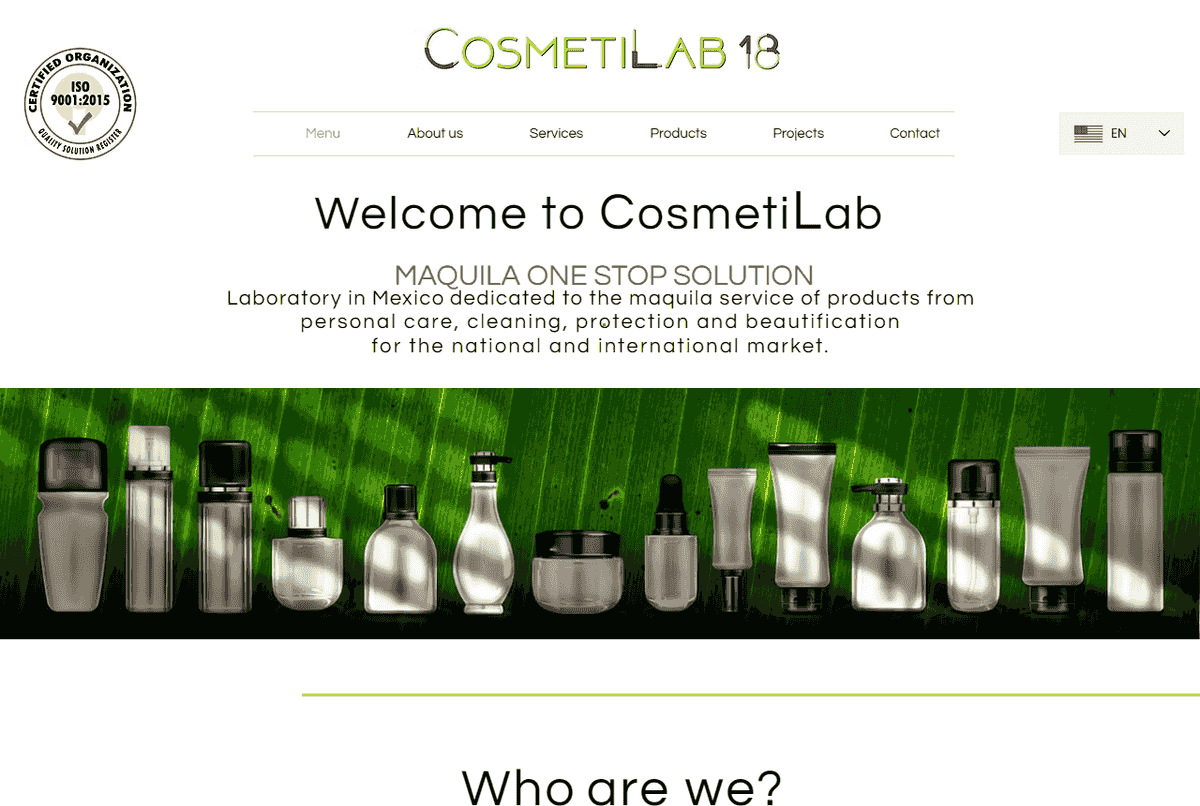
HQ: Mexico · Type: Contract manufacturer, multi-category · Best known for: “One stop” maquila across cosmetic and non-cosmetic formats
Founded in 2017 and describing itself as part of a multinational group with more than 30 years of history, CosmetiLab 18 offers formulation, manufacturing, conditioning, quality assurance and logistics under a single contract. It is one of the few Mexican laboratories to publish its certification position plainly: ISO 9001:2015 held, with ISO 22716 and ISO 14001 stated as in process at the time of writing — which is honest, and also a reason to ask for current certificate copies rather than assuming. Its category list extends well beyond beauty into home, automotive and pet products, so a cosmetic brand should confirm which lines run on dedicated equipment.
3. Eureka Cosmética
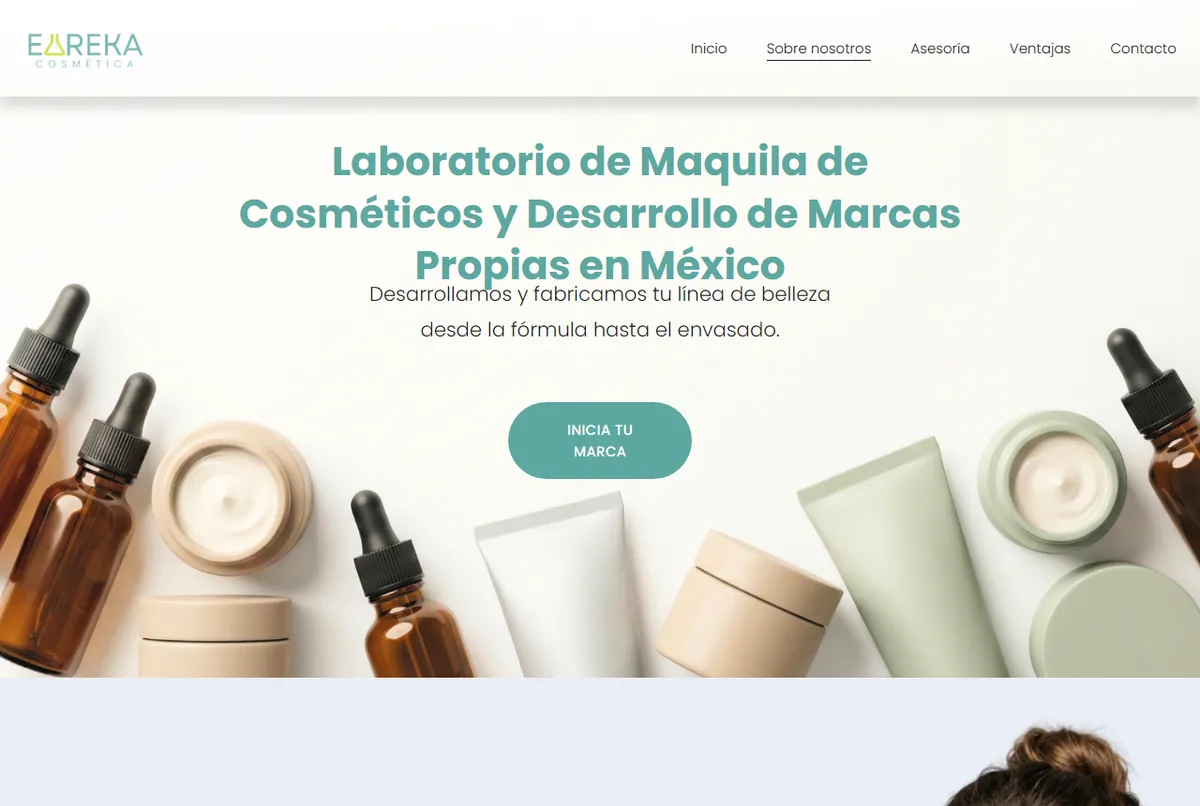
HQ: Zapopan, Jalisco · Type: Private-label laboratory · Best known for: Guiding first-time founders from formula to finished pack
Eureka Cosmética is built for the brand that has not manufactured before. Its site walks through formulation, packaging selection, label design and regulatory labelling advice as one service, and it explicitly segments its clients into founders launching a first brand, established brands scaling production, and one-off specialist jobs. It works in skincare, hair care and body care with natural-origin ingredients and cruelty-free positioning, and describes volumes as “accessible” rather than quoting a number. No certifications are published on the site, which for a small Jalisco laboratory is common but should be resolved in writing before a purchase order; our explainer on the difference between OEM, ODM and private label is a useful reference for pinning down exactly which service you are buying here.
4. Gardenia Naturals Labs (GNL)
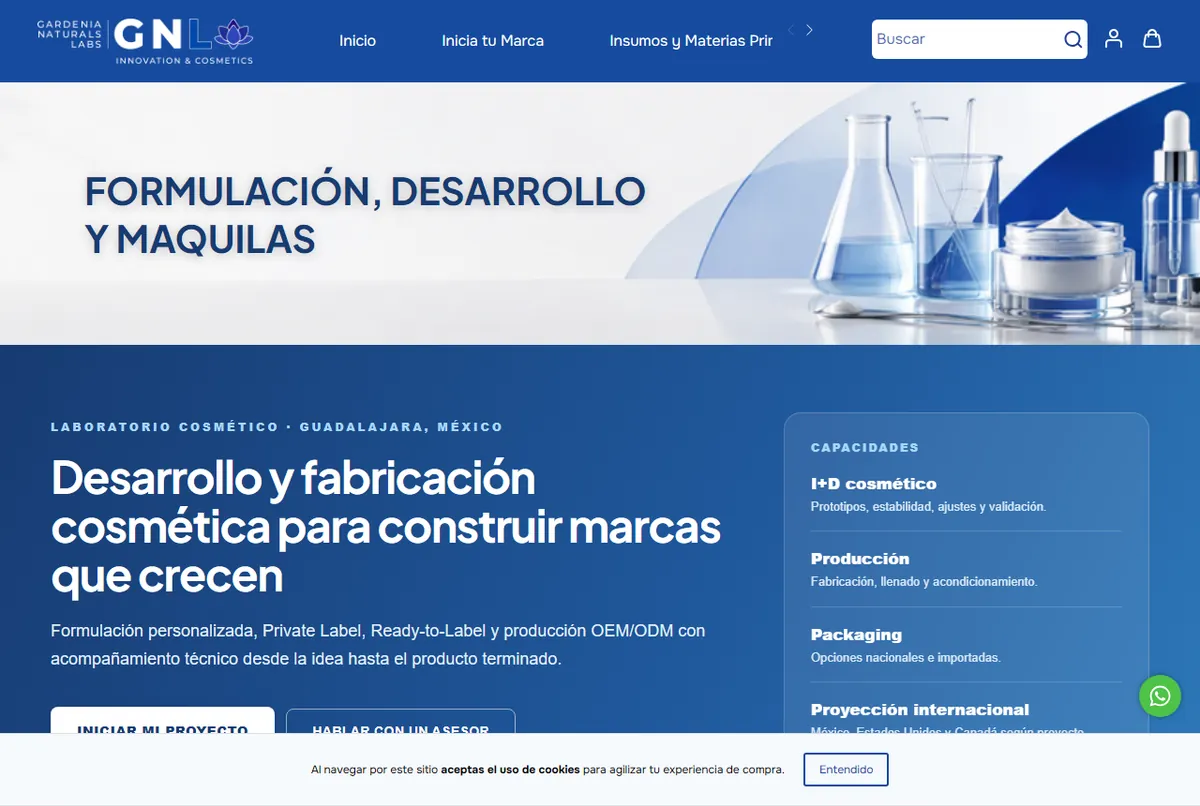
HQ: Guadalajara, Jalisco · Type: Contract manufacturer plus raw-material supplier · Best known for: Ready-to-label from 10 units and private label from 100
Gardenia Naturals Labs publishes the most concrete entry terms of any company on this list: ready-to-label stock from 10 pieces subject to availability, and private label or OEM/ODM development from 100 pieces. It states COFEPRIS, FDA and Health Canada registrations and claims more than 550 brands developed since 2020, across facial and body skincare, hair care, dermocosmetics, sun care and naturals. The trade-off is navigational rather than technical — its homepage is a consumer-facing shop that also sells raw materials, so the contract-manufacturing offer sits one click in, on the maquila page captured above. For brands weighing whether a 100-unit start is genuinely a good idea, our analysis of low-MOQ cosmetics manufacturing covers what you give up on unit cost.
Visit Gardenia Naturals Labs →
5. Helleskin Laboratorios
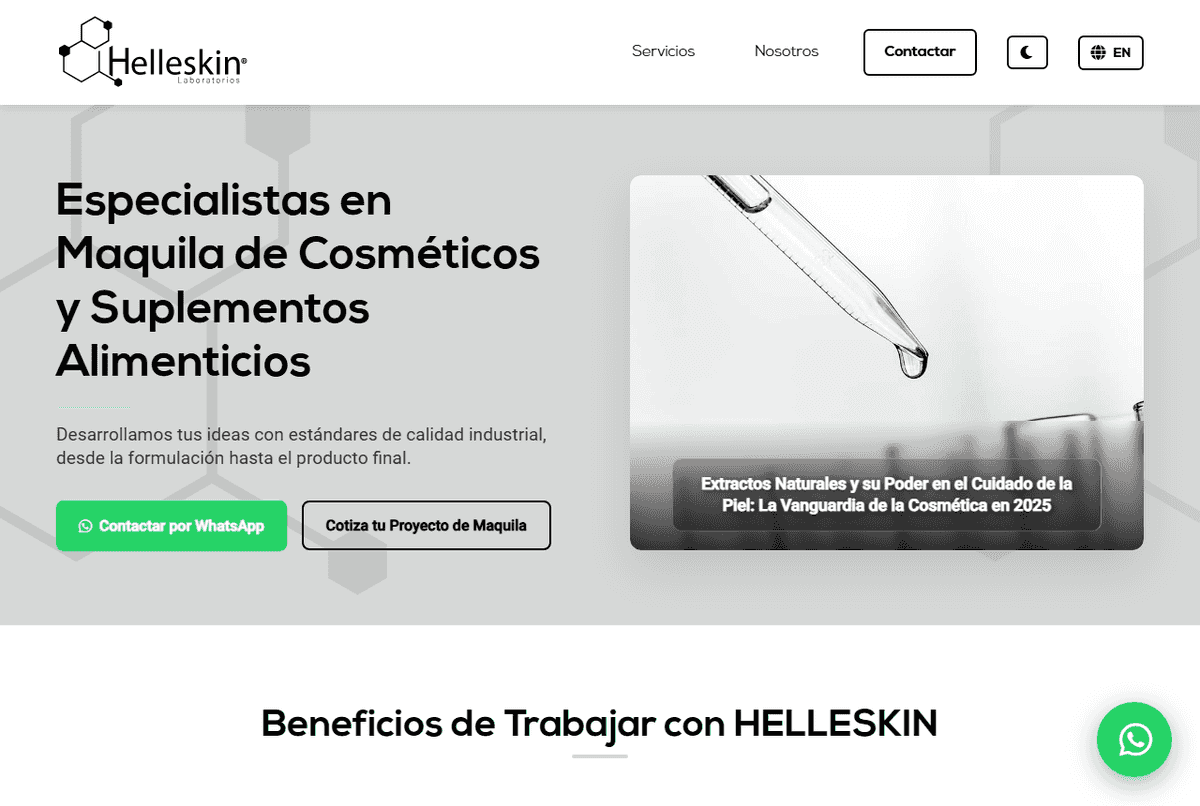
HQ: Mexico (city not published on its website) · Type: Formulation laboratory and maquilador · Best known for: Cosmetics and dietary supplements from one partner
Helleskin positions itself as a formulation laboratory first and a maquilador second, offering cosmetics and food-supplement manufacturing side by side — a genuinely useful combination for the growing number of beauty brands adding an ingestible SKU. Its own materials describe more than a decade of work across cosmetics, health, food and agro-industrial formulation, and the site is unusually clear about the development sequence from brief to finished product. What it does not publish is plant location, capacity or certification detail, so treat the website as an introduction rather than a technical dossier and put those questions in your first email.
Visit Helleskin Laboratorios →
6. IMAQ Industrial Maquiladora
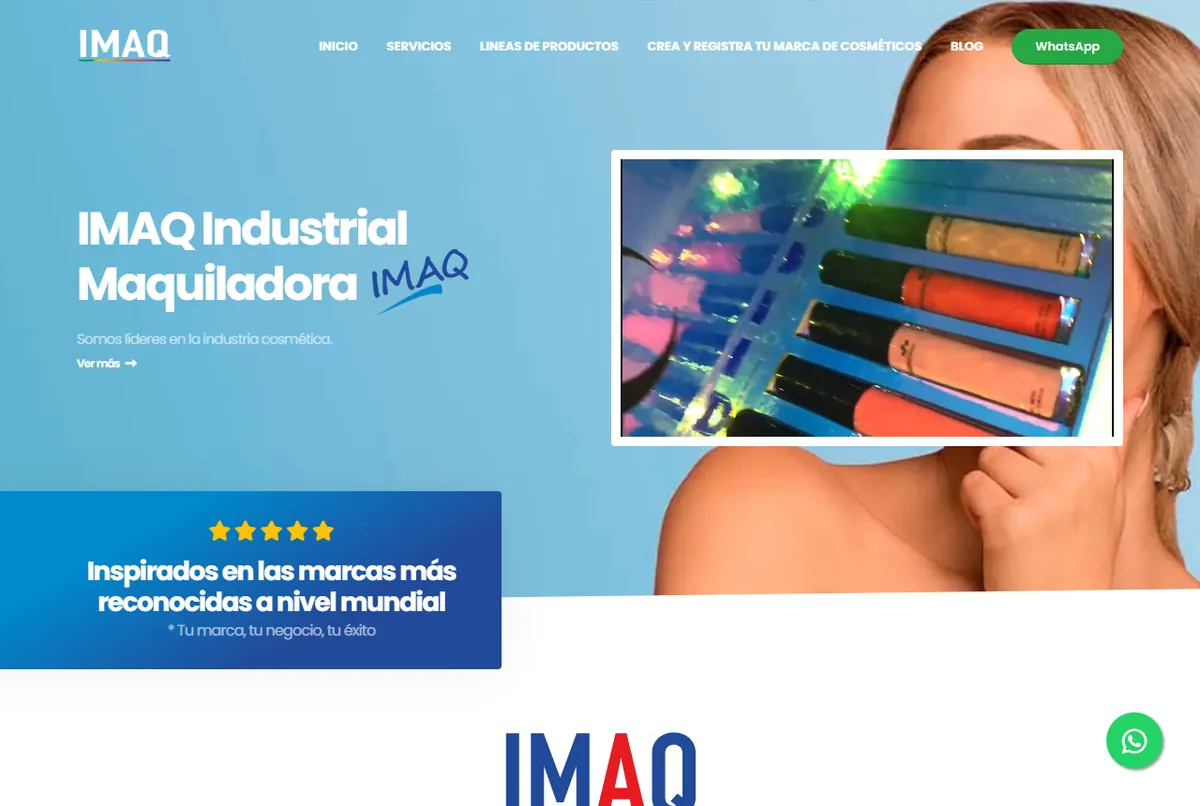
HQ: Naucalpan de Juárez, Estado de México · Type: Vertically integrated contract manufacturer · Best known for: Colour cosmetics with in-house container and decoration capability
IMAQ is the most vertically integrated operation we found in Mexico. Alongside formulation and filling it states in-house injection and blow moulding for containers, hot stamping, screen printing, tampography and three-, four- and eight-colour flexographic label printing, and it claims more than 60 years in the cosmetics trade. Its beauty line is heavily weighted to colour — mascaras, shadows, glitters, pigments, primers, palettes and airbrush products — which is comparatively rare among Mexican independents. It publishes no certifications on the site, so ask for the Aviso de Funcionamiento and NOM-259 evidence early; the packaging integration is the reason to have the conversation.
Visit IMAQ Industrial Maquiladora →
7. Laboratorios Anteii

HQ: Jalisco · Type: Contract manufacturer and distributor · Best known for: Long-running skin, hair and body care production with export documentation
Founded in 1989, Anteii is among the most established independents on this list and one of the few with a full English site — a small signal that it is used to non-Mexican clients. It states COFEPRIS good-manufacturing-practice status, a SEDEX ethical audit and a US FDA cosmetic registration number, and it runs distribution alongside manufacturing. It is also refreshingly explicit about scope: Anteii states it does not produce colour cosmetics or makeup, working instead in facial, hair and body formats. That kind of published boundary is more useful to a buyer than a claim to make everything.
8. Naturalcare Cosmetics Lab
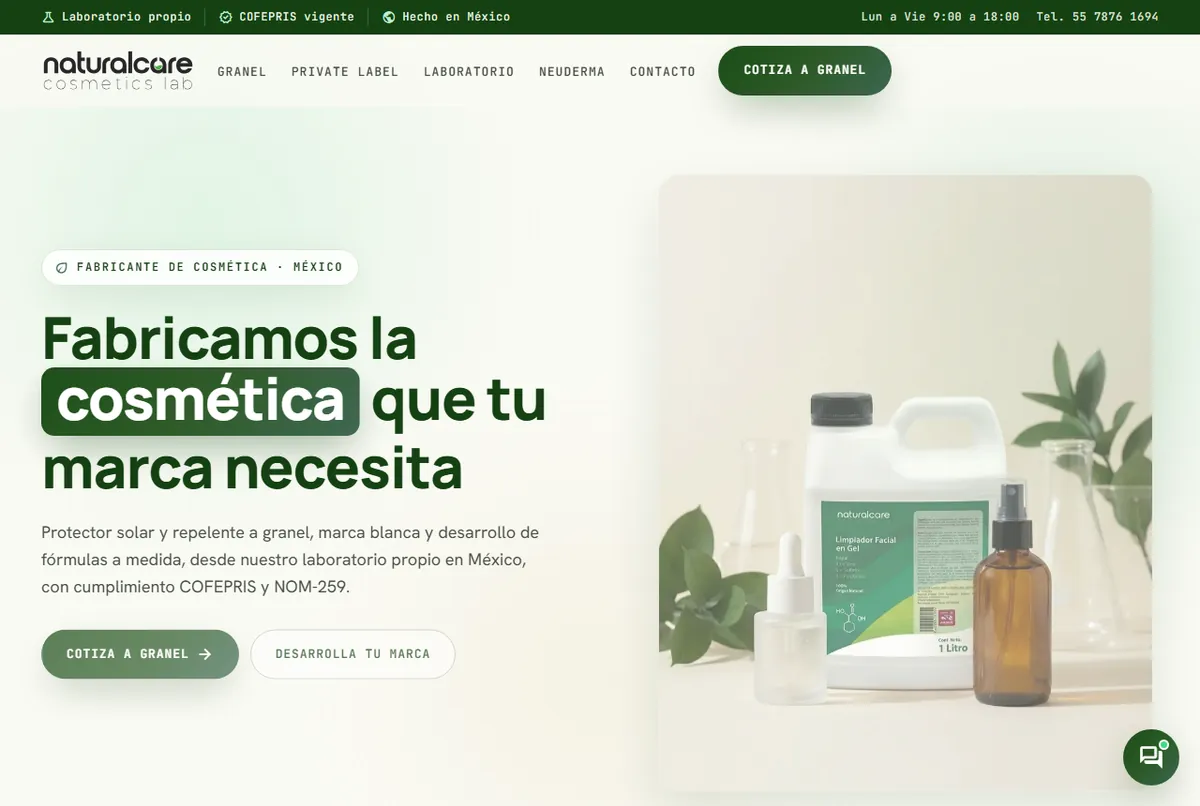
HQ: Metepec, Estado de México · Type: Own-plant laboratory, bulk and private label · Best known for: Bulk sun care and insect repellent, and published compliance detail
Naturalcare is the most transparent company in this group on regulatory matters: it publishes its COFEPRIS operating-notice key on the site and names both NOM-259-SSA1-2022 and NOM-141-SSA1/SCFI-2012 as the standards it manufactures and labels to. Commercially it splits its offer into bulk (granel), private label and full OEM development, with sunscreen and repellent as flagship bulk categories — a useful combination for brands that want to fill and pack themselves. It is a younger operation than Anteii or IMAQ, with its web presence dating to 2020, so weight the reference-checking accordingly.
Visit Naturalcare Cosmetics Lab →
9. OMC — Organik Maquiladora Cosmética
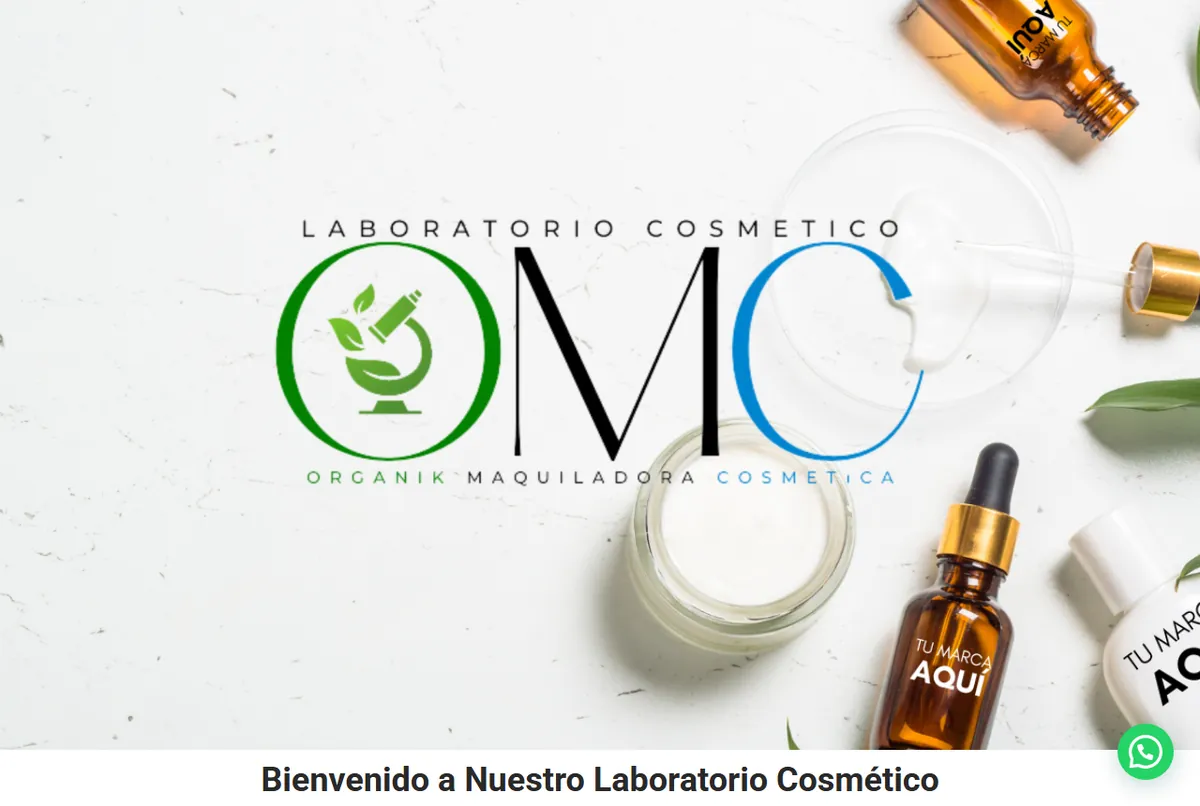
HQ: León, Guanajuato · Type: Contract manufacturer with brand-setup services · Best known for: Wide format range plus labelling, decoration and brand registration
OMC works from León in the Bajío and covers makeup, skincare, hair care and hygiene, with natural, organic, vegan and clinical positioning options. Beyond production it offers brand registration, barcode registration and more than a hundred label and decoration types including screen printing, hot stamping and tampography — the kind of administrative scaffolding a first-time founder usually has to assemble from three suppliers. It states it serves Mexico, the United States, Spain, Guatemala and Peru, and describes minimums as adaptable to format and packaging. Its claim to manufacture “absolutely any cosmetic product” is the one line worth pressure-testing against your specific formula.
10. Tecnología Cosmética
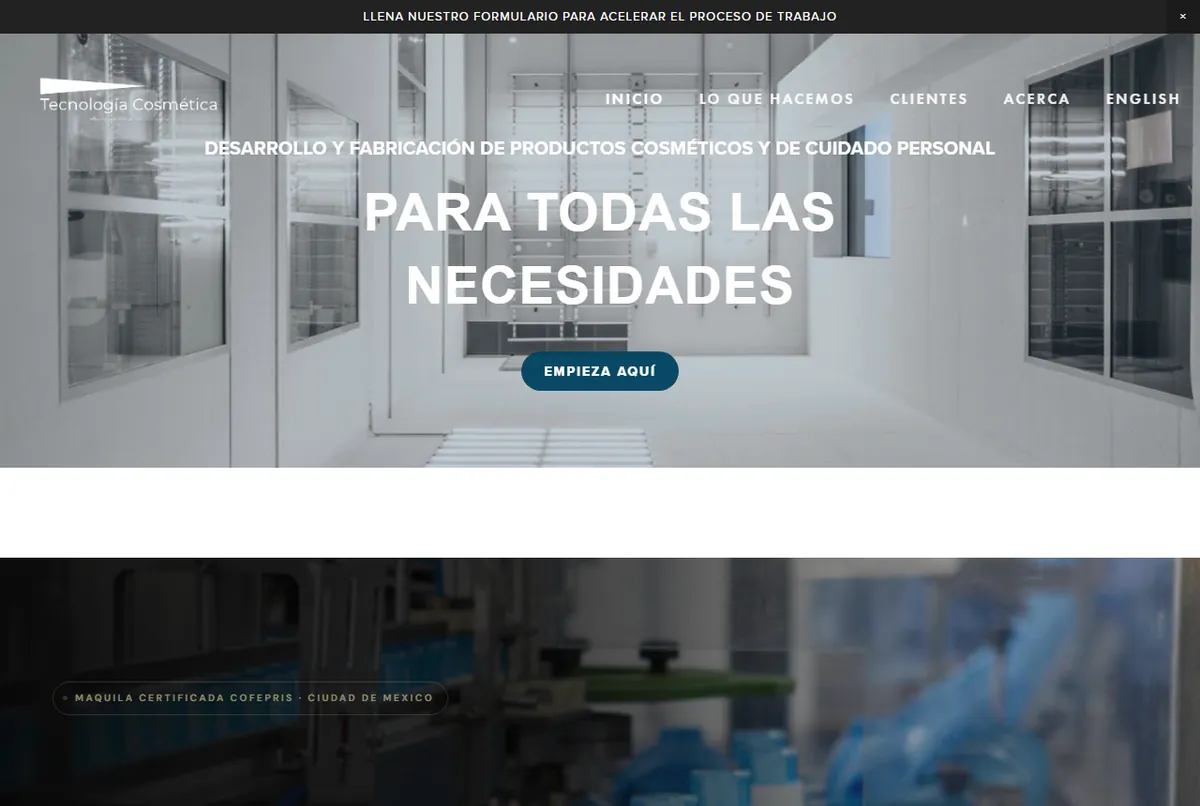
HQ: Ciudad de México · Type: Contract manufacturer, private label · Best known for: Thirty-plus years across skincare, fragrance and home care
Tecnología Cosmética is one of the longest-established maquiladores in Mexico City, with more than three decades of operation and a stated COFEPRIS good-manufacturing-practice certification. Its six declared categories — skincare, personal care, fragrances, makeup, oils and aromatherapy, and home care — make it one of the few on this list that can take on perfumery work alongside creams. It is also unusual in quoting an entry threshold as a project value, roughly MXN 50,000, rather than a unit MOQ, which suits a brand ordering several small SKUs at once better than a single high-volume line. Its published process runs consultation, formula development, stability testing and then production with labelling.
Notable exclusions: who we looked at and left out
Fourteen Mexican companies were researched and captured for this list. Five did not make it, and the reasons are worth publishing — they are the same reasons a buyer working from a recycled English-language listicle can waste a fortnight.
- JAGG CARE (Coyoacán, Mexico City) — the domain jagg.care has expired and now serves a GoDaddy parking page. It is still listed as a live manufacturer in other 2026 round-ups of Mexican private-label suppliers.
- Lunalabs México — the site returns a 403 to normal requests and, when it does load, shows a site-builder message stating the website is not active. Also still cited elsewhere as current.
- Factor Labs — a real Mexican contract laboratory, but the homepage fires a promotional newsletter overlay across the hero on load. Its interior contract-manufacturing page rendered cleanly; we left the company out rather than represent it with an interior text page while the other ten are shown on their main pages.
- Servical Mexicana (Estado de México) — over 50 years old and genuinely does maquila personal care, but it sits alongside cleaning chemicals, perfumery and water treatment. Under our “cosmetics as a core line” rule it belongs in a chemicals list, not this one.
- Profusion Lab (El Marqués, Querétaro) — captured clean and would have qualified. It was cut only to cap the list at ten, and is a reasonable candidate for a future update.
Methodology and limitations
Candidates were assembled from Spanish- and English-language search across 24 domains between 18 and 24 August 2026, then screened against the four eligibility rules above. Fourteen companies had resolving websites; all fourteen were loaded in a clean headless Chrome instance at 1280×860 with an 18-second render budget on 24 August 2026 and screenshotted. The screenshots in this article are those captures, unedited — they are what the site looked like that day, which is also why one of them is an interior maquila page rather than a homepage, noted in that entry.
What we did not do matters as much. We did not visit any plant, audit any quality system, request or verify certificates against issuing bodies, test any product, or contact any company for comment. Every certification, MOQ, founding year and capability described above is company-stated and reproduced as such. MOQ and pricing figures in particular move with format, packaging availability and season — treat the published numbers as an opening position, not a quotation, and read them alongside our explainer on what MOQ, lead time and turnkey actually mean.
Coverage is limited to companies with a working public website in Spanish or English. Mexico’s maquila sector includes laboratories that trade almost entirely through referral and WhatsApp and publish nothing; their absence here is a limitation of the method, not a judgement on their capability. Comparable lists for neighbouring markets are available for the United States, Canada and Brazil, and a broader set of verified suppliers sits in the OEMHallmark manufacturer directory.
Frequently asked questions
Do I need to register my cosmetic product with COFEPRIS before selling it in Mexico?
Generally no. Mexico regulates cosmetics primarily at facility level: the manufacturer or importer files an Aviso de Funcionamiento with COFEPRIS, and individual cosmetic products are not subject to the pre-market registration used in China or under ASEAN notification. You are still responsible for the product complying with NOM-259-SSA1-2022 manufacturing requirements and NOM-141-SSA1/SCFI-2012 labelling rules, and for holding evidence that the formula is safe. Products making therapeutic claims fall outside the cosmetic category and are regulated more strictly, so claim wording is where most problems start.
What is a realistic minimum order quantity at a Mexican cosmetics maquiladora in 2026?
Lower than most global sourcing markets. Two companies on this list publish figures: Gardenia Naturals Labs states ready-to-label stock from 10 pieces and private label from 100, while Tecnología Cosmética states a minimum project value of about MXN 50,000 rather than a unit count. Others describe minimums as adaptable to format and packaging. As a planning assumption, expect a few hundred to a few thousand units for a custom formula, with the packaging component — not the bulk — usually setting the real floor. All figures here are company-stated as of August 2026 and should be confirmed in a quotation.
Is ISO 22716 certification required for a cosmetics factory in Mexico?
No. COFEPRIS has clarified that enforcement follows Mexico’s own NOM-259-SSA1-2022 good-manufacturing-practice standard and the sanitary-risk framework, not ISO 22716, and that a GMP certificate is not mandatory. Several Mexican laboratories hold ISO certificates anyway because export customers in the United States, Canada or Europe ask for them — CosmetiLab 18, for example, publishes ISO 9001:2015 with ISO 22716 stated as in progress. If your route to market includes the EU or the UK, ISO 22716 evidence is worth requiring contractually even though Mexican law does not.
Does manufacturing in Mexico make it easier to sell in the United States and Canada?
It helps on logistics and tariffs but not on compliance. Goods meeting USMCA rules of origin can move between the three countries at preferential duty rates, and road freight from central Mexico to US distribution centres is measured in days rather than the weeks an Asian ocean route takes. Compliance is still separate: US market entry runs through the FDA and MoCRA facility registration and product listing, and Canadian entry through Health Canada’s Cosmetic Notification Form and Hotlist. Two companies here — Gardenia Naturals Labs and Laboratorios Anteii — state registrations covering those markets.
Update history
- 24 August 2026 — First published. Ten companies profiled from fourteen captured candidates; five exclusions documented; screenshots captured 24 August 2026.
Sources: company websites as cited and captured on 24 August 2026; COFEPRIS and Mexican Official Standards NOM-259-SSA1-2022 (good manufacturing practices for cosmetic products) and NOM-141-SSA1/SCFI-2012 (cosmetic labelling). Company details, certifications and minimum order quantities are as stated by each company and were not independently audited. This article is editorial research, not a recommendation to contract with any particular manufacturer — verify current registration, capability and capacity directly before placing an order.